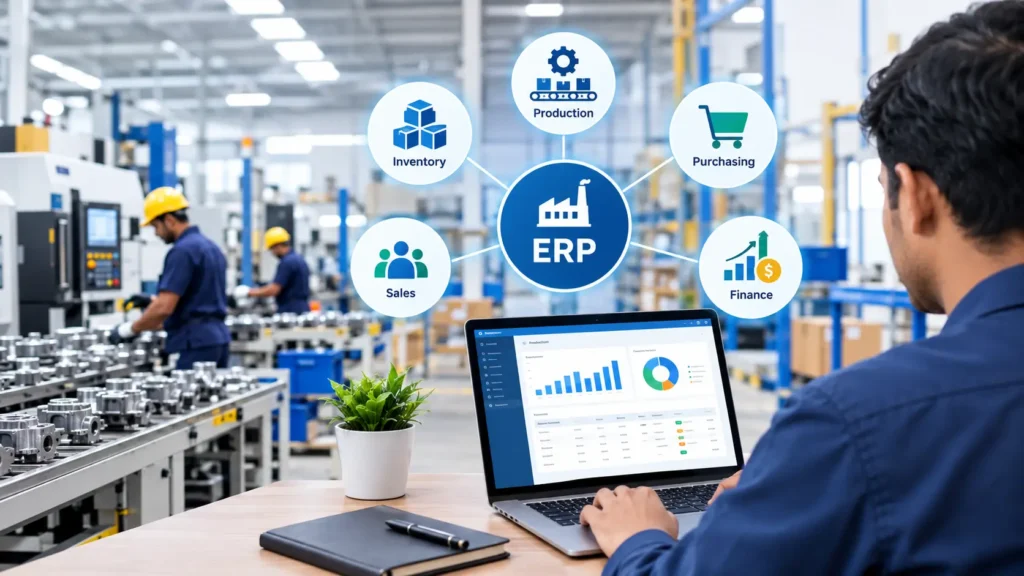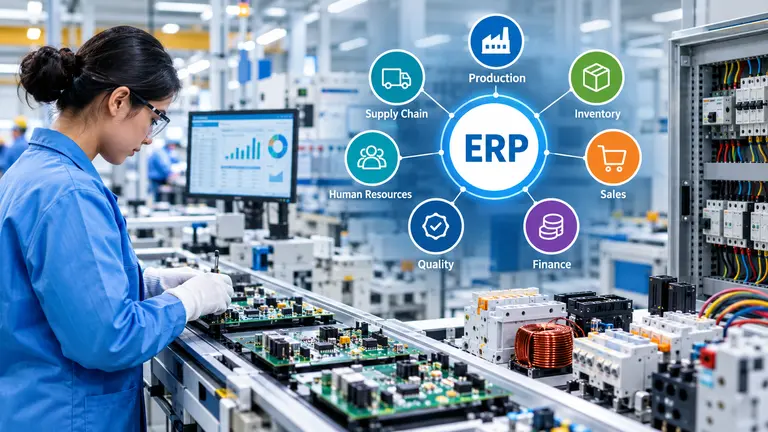

Manufacturing businesses need to manage production, inventory, purchasing, sales and costs without unnecessary delays. As operations grow, handling everything through spreadsheets or separate software can become difficult. This is where ERP software can make a real difference.
With the right ERP system, manufacturers can bring their daily operations together, improve visibility and make better business decisions. Whether you run a small manufacturing unit or a growing production company, choosing the right solution can help you manage resources more effectively.
ERP Solutions for Manufacturing Industry: Why Do Manufacturers Need Them?
Manufacturing involves several connected activities, from purchasing raw materials to producing finished goods and delivering orders. When these processes are managed separately, businesses may face stock shortages, production delays, inaccurate reports and rising operating costs.
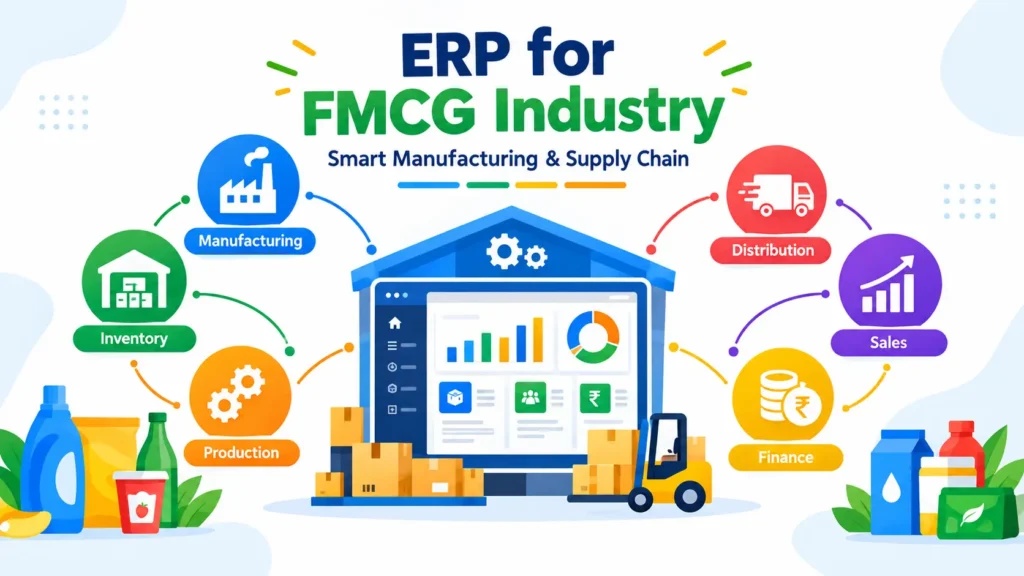
ERP solutions for the manufacturing industry connect these activities through a central system. This allows teams to access updated information and coordinate their work more efficiently.
A manufacturing ERP system can help businesses with:
- Production planning: Organise production schedules, monitor work orders and manage manufacturing activities.
- Inventory management: Track raw materials, work-in-progress items and finished goods.
- Purchase management: Monitor supplier orders, purchasing requirements and material availability.
- Cost control: Understand material, labour and production costs to support better budgeting.
- Quality management: Record inspections, identify issues and maintain consistent product standards.
- Reporting and analysis: Review business performance using organised, up-to-date information.
By connecting these functions, manufacturers can reduce manual work, improve coordination and make their operations easier to manage.
Affordable Manufacturing ERP Software: What Should You Look For?
Choosing affordable manufacturing ERP software is important for businesses that want to improve efficiency without placing unnecessary pressure on their budgets.However, affordability should not mean compromising on essential features. The right solution should address your current operational challenges and support your business as it grows.
Before selecting an ERP system, consider the following factors.
Essential Features for Your Manufacturing Business
Look for software that offers production planning, inventory tracking, purchasing, order management and useful business reports. Depending on your industry, you may also need bill of materials (BOM) management, batch tracking, quality control or shop-floor monitoring.
Flexible Pricing Options
ERP pricing can vary depending on the number of users, selected modules, implementation requirements and support services. Compare the complete cost rather than looking only at the initial subscription or licence fee.
Ease of Use
A system that employees find difficult to use may lead to poor adoption and unnecessary training costs. Choose an ERP solution with a straightforward interface and workflows that suit your team’s daily responsibilities.
Room for Business Growth
Your requirements may change as production volumes increase or you introduce new products. An ERP system should allow you to expand its capabilities without requiring a complete replacement.
Reliable Support and Implementation
Implementation, staff training and ongoing technical support are important parts of the investment. Make sure you understand what assistance is included before making a decision.
Low Cost Manufacturing ERP Software: How Can It Reduce Business Expenses?
Low cost manufacturing ERP software can help manufacturers manage resources more carefully and identify opportunities to reduce avoidable expenses.
The goal is not simply to buy the cheapest software. It is to choose a solution that delivers practical value and helps control the costs associated with everyday operations.
Reduce Excess Inventory
Keeping too much stock ties up working capital and increases storage costs. ERP software can provide better visibility into stock levels, material usage and purchasing requirements, helping businesses make more informed inventory decisions.
Minimise Production Delays
Production delays can affect delivery schedules, customer relationships and profitability. By coordinating material availability, work orders and production schedules, an ERP system can help teams identify potential problems earlier.
Reduce Manual Data Entry
When employees enter the same information into multiple spreadsheets or systems, mistakes and duplicated work become more likely. A central ERP system can reduce repetitive data entry and improve consistency across departments.
Improve Production Cost Visibility
Understanding the cost of materials, labour and manufacturing activities helps businesses evaluate product profitability. Better cost visibility can support pricing decisions, budgeting and process improvements.
Make Better Use of Business Resources
ERP reports can help managers identify bottlenecks, review resource utilisation and make decisions based on available operational data rather than guesswork.
Important: The actual savings depend on your business processes, implementation quality and how effectively your team uses the system.
Cloud ERP for Small Manufacturers: Is It the Right Choice?
Cloud ERP for small manufacturers is an option worth considering for businesses that want access to integrated software without managing all the underlying IT infrastructure themselves.
With a cloud-based system, authorised users can generally access business information through an internet connection, depending on the software provider and its access controls.
This can be particularly useful for small manufacturing businesses with limited IT resources or teams working across different locations.
Lower Initial Infrastructure Requirements
Cloud ERP may reduce the need to purchase and maintain on-site servers. However, subscription fees, implementation, training and other services should still be included when calculating the total cost.
Access to Business Information
Depending on the platform, managers and employees can access production, inventory and order information remotely. This can improve coordination between the office, warehouse and production teams.
Easier System Maintenance
Cloud providers generally manage hosting and much of the underlying infrastructure. Software updates, backup arrangements and service commitments vary, so businesses should review the provider’s policies carefully.
Flexible Business Expansion
As a manufacturing business grows, it may need more users, additional features or improved reporting. Cloud ERP platforms may offer flexible options for expanding capacity, depending on the provider’s pricing and product design.
Data Security and Backup Considerations
Before choosing a cloud solution, review its security controls, user permissions, backup procedures, recovery arrangements and data-handling policies. These details are important for protecting commercial and production information.
For small manufacturers, cloud ERP can be a practical choice when its features, costs and support arrangements match the business’s requirements.
Key Features to Compare in Manufacturing ERP Software
Every manufacturing business has different requirements. A company producing customised components may need different functionality from a business manufacturing products in large batches.
When comparing ERP systems, consider these core capabilities:
| ERP feature | How it helps manufacturers |
| Production planning | Organises work orders and production schedules |
| Inventory management | Tracks stock availability and material movement |
| Bill of materials | Defines the components and materials required for a product |
| Purchasing | Helps manage supplier orders and replenishment |
| Quality control | Supports inspections and quality records |
| Cost tracking | Improves visibility into production expenses |
| Reporting and dashboards | Helps managers monitor operational performance |
| Order management | Connects customer orders with production and delivery activities |
Prioritise features that solve your most important problems instead of paying for functionality your business may not need.
How to Choose the Right ERP for Your Manufacturing Business
Selecting an ERP system requires more than comparing software prices. You should understand your existing processes, identify operational challenges and establish clear objectives before making a decision.
Follow these steps to make a more informed choice.
- Identify your current challenges. Determine whether your main concerns involve inventory accuracy, production delays, purchasing, reporting or cost control.
- Define your requirements. List the essential features your business needs today and the additional capabilities it may require in the future.
- Set a realistic budget. Include software fees, implementation, data migration, training, support and potential customisation.
- Request a product demonstration. Ask the provider to demonstrate your actual manufacturing workflows rather than relying only on general presentations.
- Check integration requirements. Confirm that the ERP system can work with the accounting, sales or other software your business already uses.
- Evaluate support and scalability. Understand the provider’s service arrangements, implementation process and options for future expansion.
- Measure the results. After implementation, track relevant indicators such as stock accuracy, production lead times, order fulfilment and administrative workload.
Taking these steps can help you select software that fits your operations and provides long-term value.
Why Manufacturing Businesses Should Invest in the Right ERP System
The right ERP system can help manufacturers gain better control over their daily operations. By connecting production, inventory, purchasing and reporting, businesses can reduce information gaps and make decisions with greater confidence.
For small manufacturers, the key is to find a solution that balances functionality, affordability and ease of use. A system that matches your actual requirements is often more valuable than an expensive platform filled with features you rarely use.
Whether you are exploring affordable manufacturing ERP software, comparing low cost manufacturing ERP software or considering cloud ERP for small manufacturers, start by identifying the problems you want to solve.
Conclusion
Manufacturing businesses need reliable information and well-organised processes to remain competitive. ERP software can support these goals by bringing essential business functions into one connected system.
Before choosing a solution, compare its features, total cost, implementation requirements and ability to support future growth. A carefully selected manufacturing ERP system can help improve operational visibility, manage resources more effectively and support better business decisions.
Looking for ERP solutions for the manufacturing industry? Explore how Newton ERP can support your manufacturing operations. Contact the Newton ERP team to discuss your business requirements and find an approach that fits your processes, budget and growth plans.