Small manufacturing businesses need to manage production, inventory, raw materials, orders, purchasing and accounting while keeping costs under control. When these activities are managed using separate spreadsheets or manual processes, mistakes can occur, production may be delayed, and business owners may find it difficult to track overall performance.
Manufacturing ERP software for small business helps bring these activities together in one central system. It allows manufacturers to monitor operations, improve inventory control, manage production schedules and make better business decisions.
For Indian manufacturers looking to grow their businesses, the right ERP solution can simplify daily operations and provide better visibility into every stage of production.
What Is Manufacturing ERP Software for Small Business?
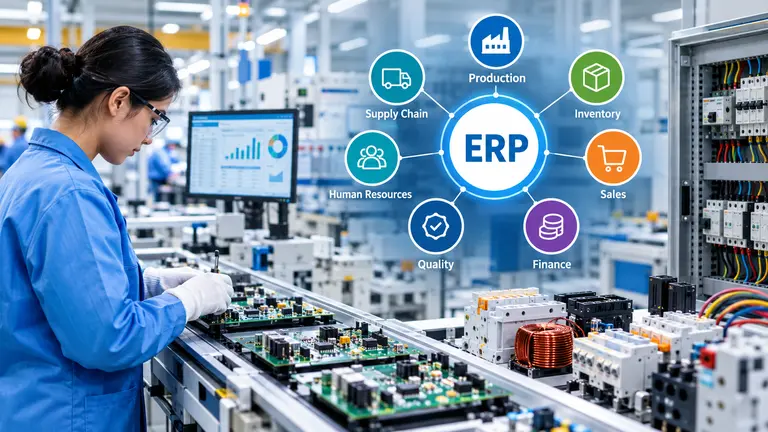
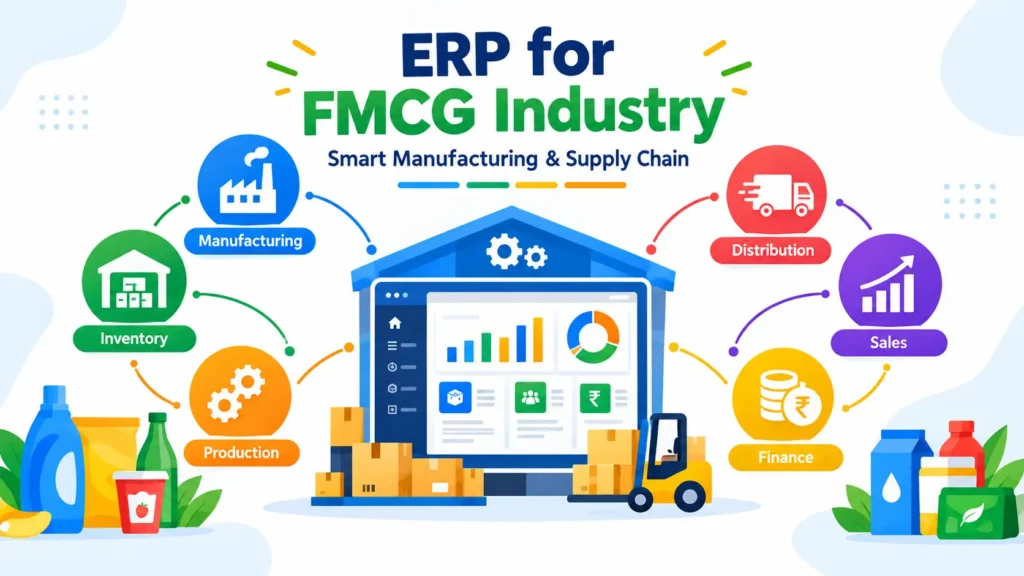
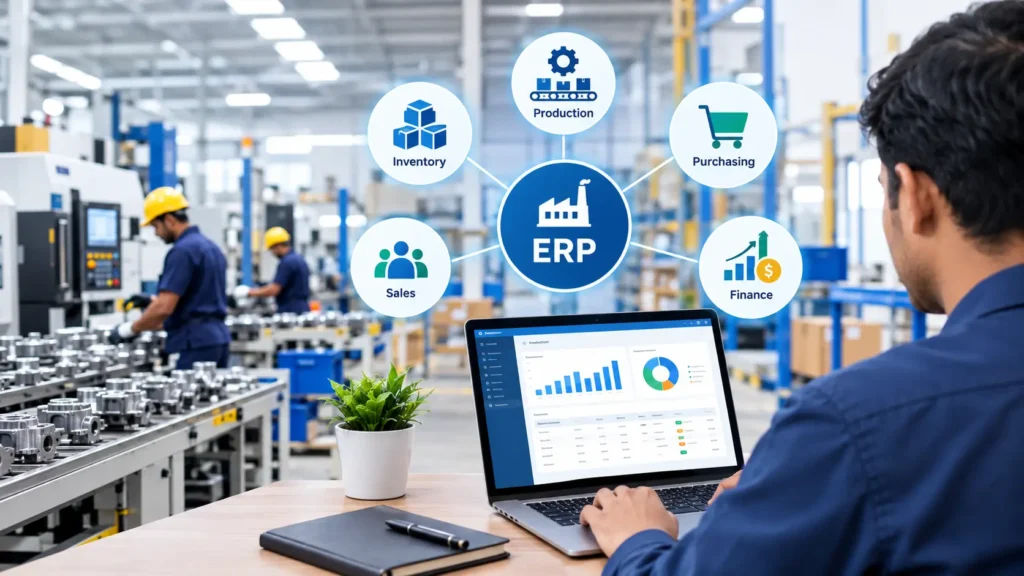
Manufacturing ERP software for small business is a centralised business management system designed to connect manufacturing operations with inventory, purchasing, sales, finance and reporting.
Instead of using different tools for each department, businesses can manage their important processes through one integrated platform. Information can be updated and shared across departments, reducing duplicate data entry and improving coordination.For example, when a customer places an order, the ERP system can help the business check available stock, identify material requirements, plan production and track order progress.
This makes it easier for small manufacturers to manage resources, fulfil orders on time and maintain control over operating costs.
ERP for Small Manufacturers: Why Is It Important?
ERP for small manufacturers is important because growing businesses often face operational challenges that become harder to manage as order volumes increase.
Common challenges include:
- Inventory problems: Difficulty tracking raw materials, work in progress and finished goods.
- Production delays: Poor coordination between material availability, production schedules and customer orders.
- Manual errors: Repeated data entry can lead to incorrect records and reporting mistakes.
- Limited cost visibility: Manufacturers may struggle to calculate actual production costs and profit margins.
- Disconnected departments: Sales, purchasing, production and accounts may work with different information.
- Difficulty scaling: Manual processes become increasingly complicated as the business grows.
An ERP system helps address these challenges by providing connected business information, standardising workflows and improving visibility across operations
Small Business ERP: Key Features to Look For
Choosing the right small business ERP means identifying software that meets your current requirements while supporting future growth. Small manufacturers should prioritise practical features that solve everyday business problems.
- Inventory and Stock Management
Inventory management helps businesses track raw materials, components, work in progress and finished products. Features such as stock updates, reorder alerts, warehouse tracking and batch management can help reduce stock discrepancies and prevent unnecessary purchases. - Production Planning and Scheduling
Production planning helps manufacturers organise jobs, allocate resources and schedule production according to customer demand and material availability. It also helps teams monitor production progress and identify bottlenecks. - Bill of Materials Management
A Bill of Materials (BOM) defines the components, raw materials and quantities required to manufacture a product. ERP software can help maintain BOM records, calculate material requirements and support more accurate production planning. - Purchase and Supplier Management
Purchasing features help businesses create purchase orders, track supplier deliveries, manage supplier information and coordinate material procurement. This improves purchasing visibility and helps reduce material shortages. - Sales and Order Management
An integrated order management system helps track customer enquiries, quotations, sales orders, delivery schedules and order status. Connecting sales with inventory and production makes it easier to plan and fulfil orders. - Accounting and Financial Management
Financial management features can help businesses record transactions, track expenses, manage receivables and payables, and review financial reports. Integration with production and inventory data can also improve visibility into manufacturing costs. - Reports and Business Insights
ERP dashboards and reports help business owners monitor stock levels, production output, pending orders, expenses and operational performance. Reliable, up-to-date information supports faster and more informed decisions.
Manufacturing ERP Software India: What Should Businesses Consider?
When evaluating manufacturing ERP software India options, businesses should consider their manufacturing processes, local business requirements and long-term growth plans.
The following factors are particularly important for Indian manufacturers.
GST and accounting requirements: Check whether the ERP supports the tax and accounting workflows relevant to your business, including GST-related records and reporting requirements.
Business size and budget: Choose a solution that matches your current operations without adding unnecessary complexity or cost.
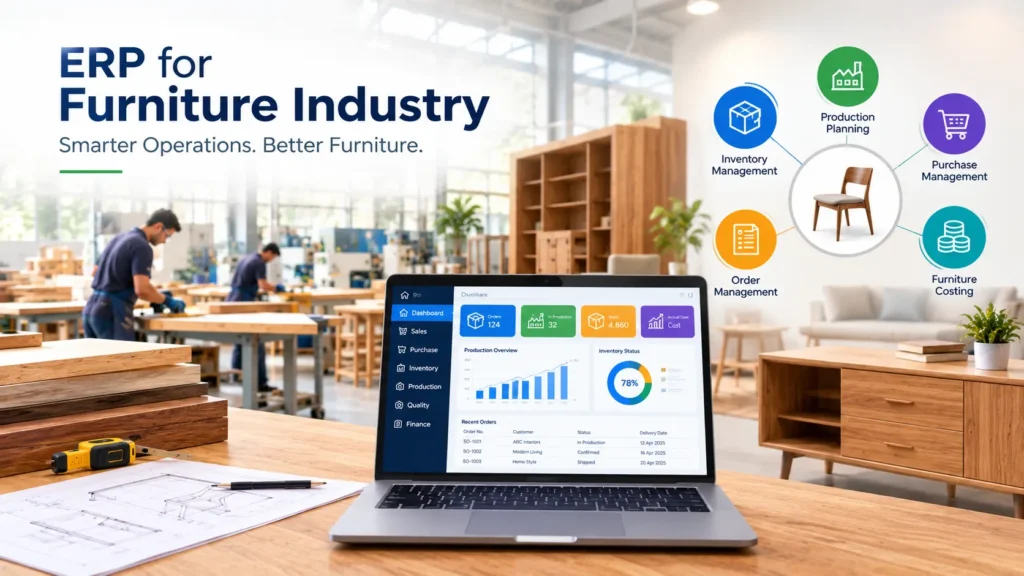
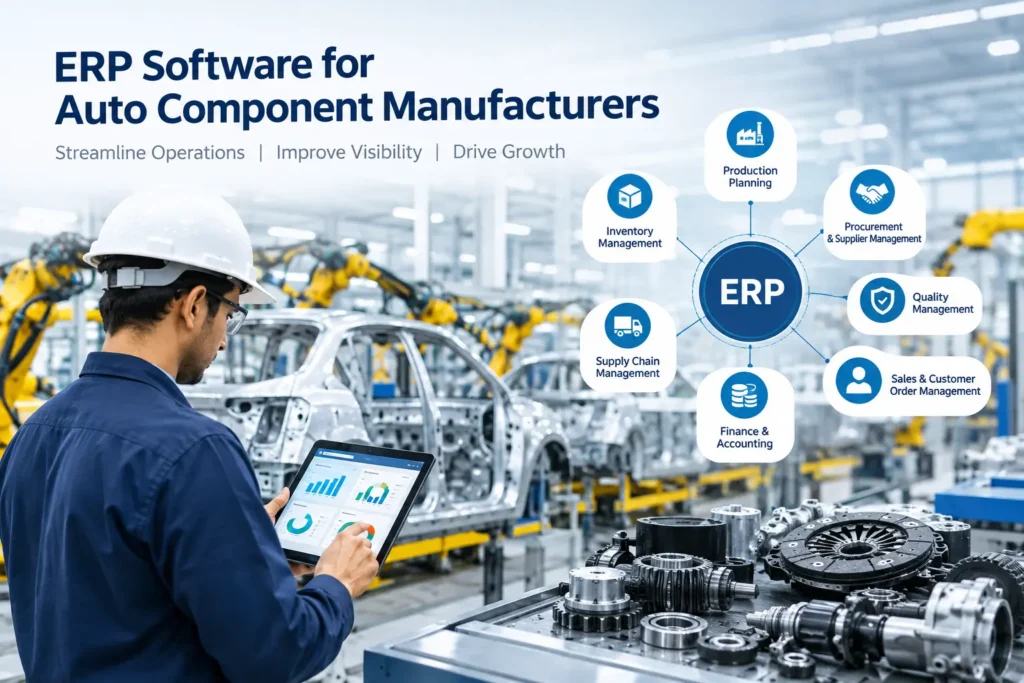
Industry-specific functionality: A business manufacturing automotive components may need different production and quality processes from a furniture manufacturer or an electronics company.
Implementation and training: Consider the time required to configure the system, migrate data, train employees and establish reliable workflows.
Customisation and scalability: The ERP should accommodate your production methods and allow you to add users, processes or capabilities as the business expands.
Support and maintenance: Evaluate the provider’s implementation support, training, software updates and ongoing assistance.
Before making a decision, request a demonstration using your actual business scenarios. This will help you understand whether the system fits your operations.
Benefits of Manufacturing ERP Software for Small Businesses
Implementing a suitable manufacturing ERP system can deliver several operational benefits.
- Better inventory control: Improve visibility into stock availability and material requirements.
- Improved production planning: Coordinate manufacturing activities and reduce avoidable delays.
- Lower administrative workload: Reduce repetitive data entry and reliance on disconnected spreadsheets.
- More accurate costing: Improve the tracking of material, labour and other production expenses.
- Faster decision-making: Access business information through centralised reports and dashboards.
- Improved customer service: Monitor order progress and coordinate production with delivery commitments.
- Support for business growth: Establish consistent processes that can accommodate increasing order volumes.
The actual benefits depend on the software selected, the quality of business data and how effectively the system is implemented.
How to Choose the Best ERP for a Small Manufacturing Business
The best ERP is not necessarily the system with the largest number of features. It is the one that solves your most important operational problems and offers value for your budget.
Follow these steps when evaluating ERP solutions:
- Identify your requirements: List the challenges you want to solve in production, inventory, purchasing, sales and accounting.
- Map your current processes: Understand how information moves between departments and where delays or errors occur.
- Compare essential features: Prioritise manufacturing functionality rather than paying for features your business will not use.
- Evaluate the total cost: Consider licences, implementation, customisation, training, support and future upgrades.
- Request a practical demonstration: Ask the provider to show how the software handles a real production order from material planning to dispatch.
- Check integration options: Confirm that the ERP can work with your existing accounting, sales or other business systems where needed.
- Plan implementation carefully: Assign responsibilities, clean existing data and train employees before the system goes live.
Taking these steps can help small manufacturers select a solution that supports both immediate operational needs and future expansion.
How Newton ERP Helps Small Manufacturing Businesses
Newton ERP helps manufacturing businesses bring key operational processes into a more connected business management environment. Depending on the modules and configuration selected, manufacturers can use ERP capabilities to manage inventory, production planning, purchasing, sales and financial information.
By connecting relevant business processes, Newton ERP can help teams improve visibility, reduce manual coordination and monitor operational performance more effectively.
For small manufacturers, the goal is to build a reliable foundation for daily operations while preparing the business to handle increasing production requirements and customer demand. Businesses should discuss their specific manufacturing workflows with the Newton ERP team to determine the most suitable modules and implementation approach.
Conclusion
Manufacturing businesses need efficient processes, accurate information and better coordination to remain competitive. Manufacturing ERP software for small business can help bring production, inventory, purchasing, sales and finance together, making everyday operations easier to manage.Whether you are searching for ERP for small manufacturers, a flexible small business ERP or manufacturing ERP software in India, focus on solutions that address your actual business challenges and offer room to grow.
With the right ERP strategy and implementation, small manufacturers can improve operational control, make informed decisions and build a stronger foundation for sustainable growth.