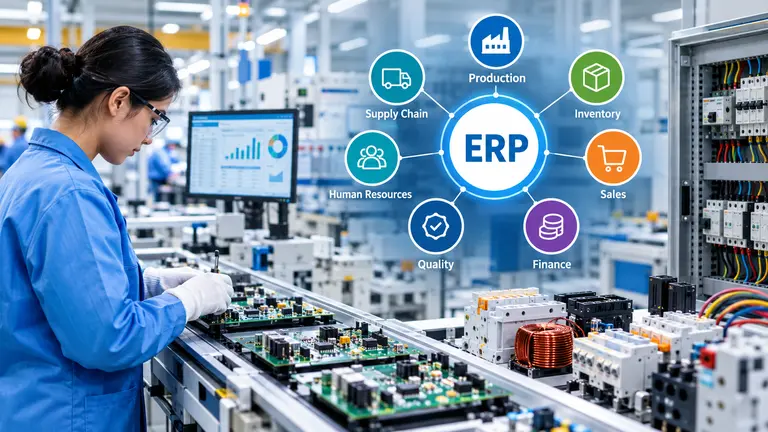
The electrical and electronics industry is growing rapidly, with manufacturers facing increasing pressure to deliver quality products, manage costs, maintain inventory, and meet customer expectations. From electrical panels and wires to circuit boards, switches, transformers, and electronic components, businesses need efficient systems to manage their daily operations. However, managing production, purchasing, inventory, sales, and accounts through separate software or spreadsheets can create unnecessary complications. This is where ERP for electrical & electronics industry can make a real difference. An ERP system brings important business activities together on a single platform. It helps manufacturers improve visibility, coordinate departments, control costs, and make better business decisions.
For electrical and electronics manufacturers looking to improve operational efficiency, the right ERP solution can provide a strong foundation for sustainable growth.
What Is ERP for Electrical & Electronics Industry?
ERP for the electrical and electronics industry is business management software designed to connect manufacturing, inventory, procurement, sales, finance, and other operations within one integrated system.
Unlike managing each department separately, an ERP system allows information to flow across the business. For example, when a sales order is confirmed, the team can check material availability, plan production, arrange purchasing, and track delivery using connected information.This integrated approach helps manufacturers reduce manual work, improve coordination, and maintain better control over their operations.
Depending on the ERP solution, businesses may also manage product configurations, bills of materials, serial numbers, batch tracking, quality inspections, and after-sales service.
Why Do Electrical and Electronics Manufacturers Need ERP Software?
Electrical and electronics manufacturers often work with hundreds or thousands of components, changing customer requirements, multiple suppliers, and strict quality expectations. Even a small mistake in inventory or production planning can affect delivery schedules and profitability.
ERP software helps address these challenges by providing better control over business processes.
Key reasons manufacturers consider ERP include:
- Better inventory control: Monitor raw materials, electronic components, finished goods, and spare parts.
- Improved production planning: Plan manufacturing activities according to demand and material availability.
- Accurate cost management: Track material, labour, production, and other operating costs.
- Quality management: Record inspections, identify defects, and support corrective actions.
- Faster order processing: Connect customer orders with inventory, production, and dispatch.
- Reliable business reporting: Access updated operational and financial information for decision-making.
By connecting these activities, ERP helps businesses reduce avoidable errors and manage growth more effectively.
Key Features of ERP for the Electrical & Electronics Industry
Choosing ERP software requires understanding which features are most relevant to your manufacturing processes. The following capabilities are particularly useful for electrical and electronics businesses.
1. Inventory and Component Management
Electronic manufacturing depends on the availability of components such as resistors, capacitors, connectors, semiconductors, cables, and circuit boards. Missing even one critical component can delay an entire production order.
ERP software helps businesses track stock levels, monitor material movements, set reorder levels, and manage multiple warehouses. Where supported, batch and serial number tracking can also help identify the movement of specific components and finished products.
This improves stock visibility and helps purchasing teams make more informed decisions.
2. Production Planning and Scheduling
Manufacturers need to coordinate material availability, machine capacity, labour, and delivery commitments. Manual planning becomes difficult when multiple production orders are running simultaneously.
An ERP system helps organise production schedules, track work orders, monitor material consumption, and compare planned production with actual output.
Depending on the system, manufacturers may also manage bills of materials, routing, work-in-progress, and assembly operations.
3. Bill of Materials (BOM) Management
A bill of materials lists the components, raw materials, and quantities required to manufacture a product.
For example, an electrical control panel may require circuit breakers, relays, contactors, wiring, terminals, and an enclosure. ERP software can help maintain the product structure and link material requirements to production orders.
When product designs change, controlled BOM updates can help teams work with the correct component specifications and reduce the risk of production errors.
4. Quality Control and Inspection
Quality is essential in electrical and electronic products because defective components can lead to rework, returns, product failures, and customer dissatisfaction.ERP software can help record incoming material inspections, in-process quality checks, final product inspections, and non-conformance reports.
When integrated with suitable quality processes, it can also support supplier quality monitoring, corrective actions, and traceability records.
These capabilities help manufacturers identify recurring problems and improve consistency across production.
5. Purchase and Supplier Management
Electrical and electronics manufacturers often depend on multiple suppliers for components, raw materials, and specialised parts. Delayed deliveries or inconsistent material quality can affect production schedules.ERP software helps manage purchase orders, supplier information, expected delivery dates, purchase costs, and material receipts.
A centralised view of purchasing activity makes it easier to review supplier performance, identify procurement issues, and plan future requirements.
6. Sales Order and Dispatch Management
Customer orders may include different specifications, quantities, delivery dates, and product configurations. Keeping these details aligned across departments is important for timely fulfilment.ERP software connects sales orders with inventory, production planning, and dispatch processes. Teams can check order status, monitor pending deliveries, and identify potential delays earlier.
This improves coordination and helps businesses provide more reliable customer service.
7. Financial Management and Costing
Manufacturers need to understand how much it costs to produce each item, fulfil each order, and operate the business.ERP software can connect purchasing, inventory, production, sales, and accounting information to support cost analysis and financial reporting.
Depending on the available modules, businesses can monitor material costs, production expenses, outstanding payments, cash flow, and profitability.
Better financial visibility helps management identify cost pressures and make informed decisions.
8. Reporting and Business Analytics
Decisions based on outdated or incomplete information can create problems across manufacturing operations.
ERP dashboards and reports can bring together information about inventory, production output, order status, purchasing, and financial performance.Managers can use these insights to identify bottlenecks, investigate delays, monitor business performance, and plan improvements.
The usefulness of these reports depends on accurate data entry, appropriate system configuration, and consistent use across departments.
Benefits of ERP Software for Electrical and Electronics Manufacturers
Implementing the right ERP system can deliver benefits across multiple areas of the business.
Reduced manual work: Automating routine transactions reduces repetitive data entry and the need to maintain separate records.
Improved inventory visibility: Teams can make purchasing and production decisions using more reliable stock information.
Better production coordination: Connected planning and inventory data help departments work toward common production targets.
Greater cost visibility: Manufacturers can review material consumption, operating expenses, and production costs more effectively.
Improved traceability: Supported batch, serial number, and quality records help businesses investigate product or component issues.
More reliable delivery planning: Linking orders, stock, and production helps teams identify potential delays before dispatch.
Scalable operations: A suitable ERP system can help businesses manage increasing order volumes and operational complexity as they grow.
Actual results depend on the quality of implementation, the features selected, employee adoption, and the condition of existing business processes.
Common Challenges in the Electrical and Electronics Industry
Manufacturers may face several operational challenges as their businesses expand.
Managing Large Numbers of Components
A single product may require numerous small components sourced from different suppliers. Poor stock visibility can lead to shortages, excess inventory, or production delays.
An ERP system can help centralise item records, stock movements, purchase planning, and material requirements.
Handling Product Variations
Electrical and electronic products may have different specifications, configurations, ratings, and component requirements. Managing these variations manually can increase the risk of incorrect production.
ERP capabilities such as item variants, controlled bills of materials, and revision tracking can help maintain consistency where supported.
Controlling Manufacturing Costs
Changing material prices, wastage, rework, and inefficient production can affect profit margins. Connected purchasing, inventory, production, and accounting records help businesses understand these costs more clearly.
Meeting Quality and Traceability Requirements
Customers may require detailed information about components, production batches, inspection results, or finished products. Suitable ERP traceability features help manufacturers maintain organised records and investigate issues more efficiently.
How to Choose the Best ERP for the Electrical & Electronics Industry
The best ERP software is not necessarily the one with the most features. It is the solution that fits your products, manufacturing processes, business size, and future plans.
Before selecting an ERP system, consider the following factors:
- Industry suitability: Check whether the software supports your manufacturing processes, product structures, and inventory requirements.
- Inventory and traceability: Confirm support for batch tracking, serial numbers, warehouse management, and component-level tracking where required.
- Production management: Evaluate production planning, work orders, BOMs, material requirements, and work-in-progress tracking.
- Quality management: Review inspection records, non-conformance handling, and quality reporting.
- Financial integration: Ensure purchasing, production, inventory, sales, and accounting information can be connected appropriately.
- Reporting capabilities: Look for reports that help managers monitor costs, production performance, stock, and deliveries.
- Integration options: Check whether the ERP can work with existing accounting tools, barcode systems, machines, or other business applications.
- Implementation and support: Understand the setup process, training, data migration, ongoing support, and total cost of ownership.
- Scalability: Choose a system that can support your expected business growth without unnecessary complexity.
Request a demonstration using your actual business scenarios, such as creating a production order, checking component availability, recording a quality inspection, and dispatching a customer order.
How Newton ERP Helps Electrical and Electronics Manufacturers
Newton ERP helps businesses streamline important operational activities by bringing relevant business processes together within an integrated ERP environment.For electrical and electronics manufacturers, the right ERP configuration can support inventory management, purchasing, production planning, sales, accounting, and business reporting. This gives teams better visibility into day-to-day operations and helps reduce dependence on disconnected records.By aligning ERP capabilities with specific manufacturing requirements, businesses can improve coordination between departments, monitor costs, and make more informed operational decisions.
Manufacturers should discuss their product structures, production workflows, traceability requirements, and reporting needs with the Newton ERP team to confirm which capabilities and configurations are suitable for their operations.
Why Is ERP Important for the Future of Electrical and Electronics Manufacturing?
The industry continues to evolve as products become more sophisticated, customer expectations increase, and supply chains face changing demands.Manufacturers need reliable information to coordinate purchasing, control inventory, plan production, and maintain product quality. As businesses grow, disconnected systems can make these tasks increasingly difficult.ERP provides a connected foundation for managing business information and standardising processes. When combined with accurate data, well-defined workflows, and employee training, it can help manufacturers become more organised, responsive, and prepared for future opportunities.
Investing in a suitable ERP solution is therefore not just a technology decision. It is a step toward building a more connected and efficient manufacturing business.
Conclusion
ERP for the electrical and electronics industry helps manufacturers connect production, inventory, purchasing, sales, finance, and quality-related processes. With the right features and implementation approach, it can improve visibility, reduce manual effort, support traceability, and help businesses manage operational complexity.
Whether you manufacture electrical panels, cables, transformers, circuit boards, switches, or electronic components, selecting an ERP system that matches your specific requirements is essential.Looking to improve your manufacturing operations? Explore how Newton ERP can support your business requirements and help you build a more connected, efficient, and scalable operation.