The FMCG (Fast-Moving Consumer Goods) industry does not forgive mistakes. Its nature requires a high degree of automation to achieve consistent quality and cost-efficiency across all elements of the supply chain: from raw materials to finished goods and their distribution to retailers and distributors.
This complexity makes managing an ever-growing FMCG business more challenging, especially when using disparate software or spreadsheets. An integrated ERP for FMCG industry becomes essential in such cases.
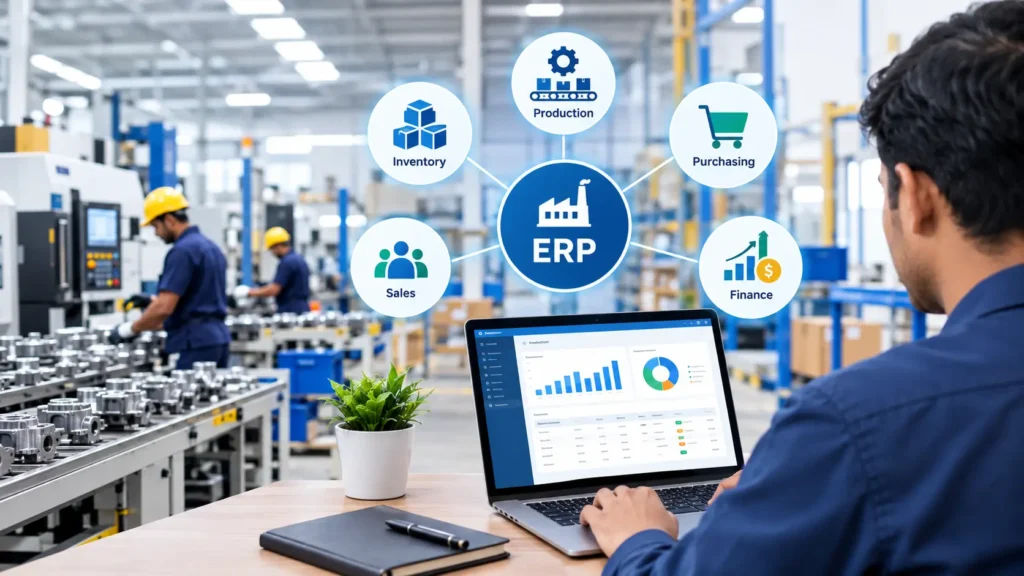
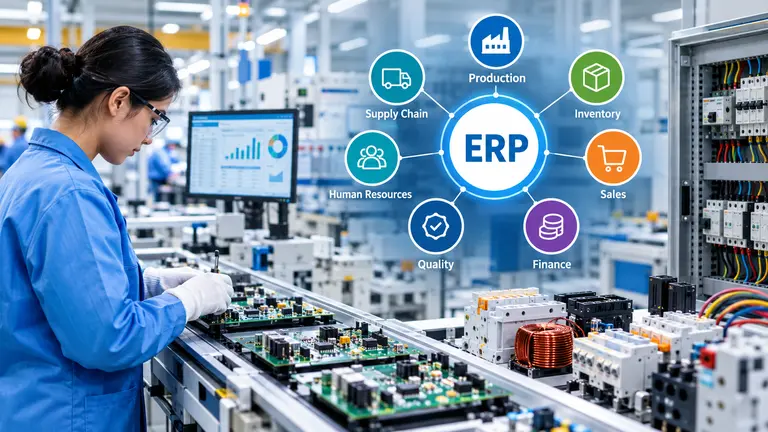
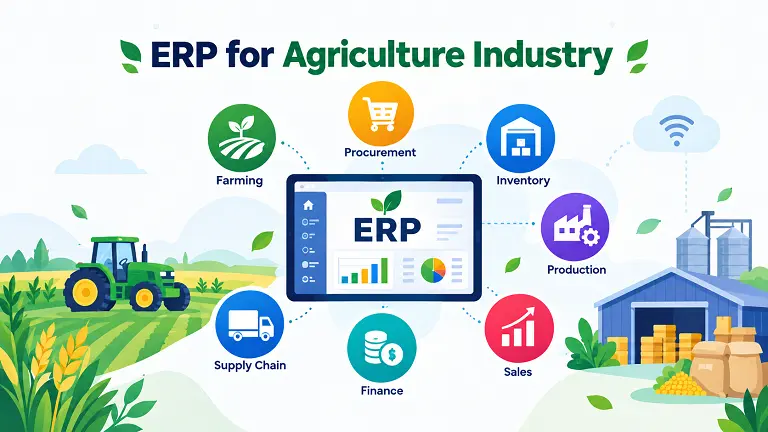
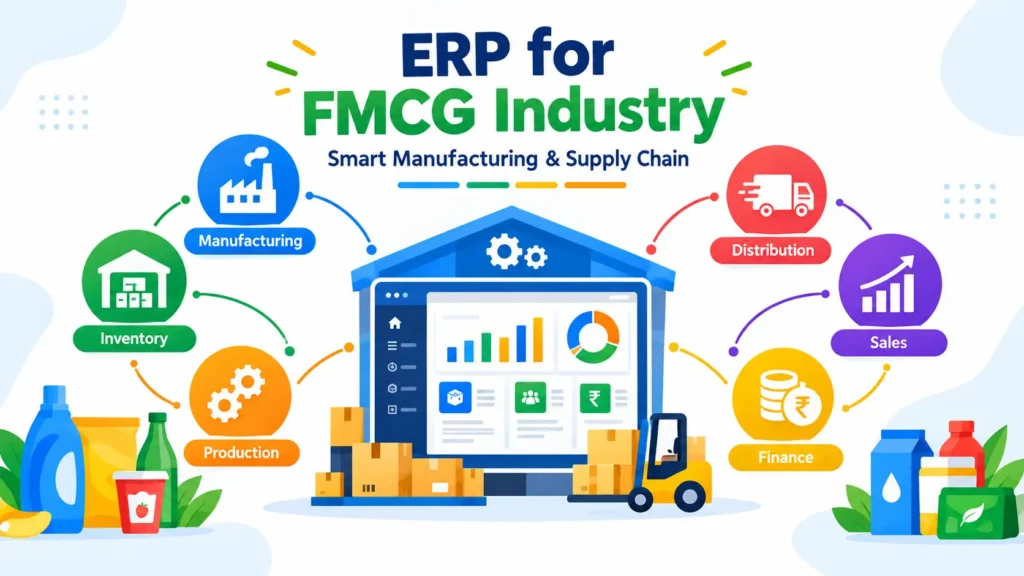
An FMCG ERP unifies processes such as manufacturing, inventory, procurement, sales, finance, quality control, warehouse management, and distribution in a single business process. This reduces the risk of errors and increases efficiency by providing a unified view and real-time information about the business.
For an FMCG company that wants to implement ERP software, the critical factor is a product that unifies functions unique to this type of business and understands its peculiarities at the level of analytics.
ERP Software for FMCG Industry: Why Do FMCG Companies Need It?
FMCG companies typically operate with high volumes of products, numerous transactions, a wide range of SKUs, and short product life cycles. For such companies, even single inventory inaccuracies or production errors can lead to significant losses in revenue.ERP software for FMCG industry helps such companies streamline their operations from a single source.
For example, with the unified ERP, an employee can see what sales orders the company has, what inventory it has, what production runs are due to be completed or are already completed, and what purchases need to be made. This way, all departments operate with a shared vision of the current state of the business and are able to make informed decisions.
An ERP system for FMCG companies can also help analyze inventory performance, production performance, purchase costs, and much more to keep working capital at optimal levels.
Manufacturing ERP Software for the FMCG Industry
For the FMCG industry, manufacturing is often the absolute core of operations. A wide variety of production processes, formulations, recipes, ingredients, and steps are involved. Each production run may require specific processing, quality control, packaging, and related resources. Manufacturing ERP software for the FMCG industry can unify these processes.
Production Planning and Scheduling
ERP software can help production teams plan manufacturing based on sales demand, inventory levels, production capacity, and material availability.This can reduce last-minute production changes and help businesses use their resources more effectively.
Batch and Lot Management
Batch tracking is important for FMCG manufacturers, particularly when products have expiry dates or require detailed traceability.
An ERP system can maintain information such as:
- Batch number
- Manufacturing date
- Expiry date
- Raw materials used
- Production quantity
- Quality inspection results
- Finished goods location
This makes it easier to trace products throughout the supply chain.
Recipe and Formulation Management
For food, beverage, personal care, chemical, and other FMCG manufacturers, product formulation can be an important part of production.ERP software can maintain approved recipes and formulations while helping production teams calculate material requirements accurately.
FMCG Industry ERP Software for Inventory Management
Inventory management is a major challenge in FMCG because businesses may deal with hundreds or thousands of SKUs across different locations.
FMCG industry ERP software provides businesses with greater visibility into stock levels across warehouses and locations.
It can help monitor:
- Raw materials
- Packaging materials
- Work-in-progress
- Finished goods
- Batch-wise inventory
- Expiry dates
- Reorder levels
- Damaged or rejected stock
- Slow-moving products
With better inventory visibility, companies can reduce unnecessary stock accumulation while maintaining sufficient inventory for customer demand.
Expiry and Shelf-Life Management
Many FMCG products have limited shelf lives. Keeping track of expiry dates manually can increase the risk of stock becoming obsolete.An ERP can help businesses monitor product shelf life and support inventory practices such as FEFO (First Expiry, First Out) where appropriate.
This is particularly useful for food, beverages, cosmetics, pharmaceuticals-related FMCG products, and other shelf-life-sensitive goods.
ERP for FMCG Industry in India: Managing Indian Business Requirements
Businesses searching for ERP for FMCG industry in India generally need more than basic production and accounting functionality.
An ERP solution for the Indian FMCG sector should support areas such as:
- GST-compliant transactions
- Tax invoices
- Purchase and sales management
- E-invoicing requirements where applicable
- Multi-location operations
- Indian accounting practices
- Vendor management
- Distributor management
- Financial reporting
- Inventory valuation
The exact requirements can differ depending on the company’s size, manufacturing model, distribution network, and regulatory environment.
Best ERP for FMCG Industry: What Should You Look For?
There is no single ERP system that is automatically the right fit for every FMCG company. The appropriate choice depends on the organization’s processes, scale, products, locations, and growth plans.
When evaluating the best ERP for FMCG industry, businesses should consider the following capabilities.
- Manufacturing Management
The ERP should support production planning, BOMs, recipes, work orders, material consumption, production reporting, and batch management. - Inventory and Warehouse Management
Look for features that provide real-time visibility into stock, locations, batches, expiry dates, transfers, and warehouse transactions. - Procurement Management
The system should help manage purchase requests, purchase orders, suppliers, receipts, and procurement costs. - Sales and Distribution
FMCG businesses need efficient order processing and distribution management. ERP software should provide visibility from sales orders through dispatch and invoicing. - Quality Management
Quality checks can be integrated into procurement, production, and finished-goods processes to help maintain consistent product standards. - Finance and Accounting
A unified ERP should connect operational transactions with accounting so management can see the financial impact of purchases, production, sales, and inventory. - Business Intelligence and Reporting
Management dashboards can help decision-makers monitor sales, production, inventory, receivables, profitability, and other important business indicators.
Best ERP Software for FMCG Companies: Key Features
When comparing the best ERP software for FMCG companies, it is useful to focus on practical business requirements rather than simply counting the number of features.
A suitable FMCG ERP may include:
| ERP Function | FMCG Business Benefit |
| Production Planning | Better coordination of manufacturing |
| Batch Management | Improved product traceability |
| Inventory Management | Better stock visibility |
| Expiry Management | Reduced risk of obsolete stock |
| Procurement | Improved material purchasing control |
| Quality Management | Consistent quality monitoring |
| Warehouse Management | More organized stock movement |
| Sales Management | Faster order processing |
| Distribution | Better dispatch coordination |
| Accounting | Connected financial information |
| Reporting | Better operational visibility |
The key is to ensure that these modules work together instead of operating as isolated applications.
ERP Software Solution for FMCG in India
An ERP software solution for FMCG in India should be scalable enough to support business growth while remaining practical for everyday users.For a growing FMCG manufacturer, the ERP implementation may begin with core areas such as inventory, purchasing, production, sales, and finance. Additional functionality can then be introduced as operational requirements increase.
A well-implemented ERP solution can help management answer important questions quickly:
- How much raw material is currently available?
- Which products are in production?
- What finished goods are available?
- Which batches are approaching expiry?
- What orders are pending?
- Which products are selling faster?
- How much material needs to be purchased?
- What is the current production cost?
- Which customers or distributors have outstanding payments?
Having this information available through one connected system can improve operational visibility.
How FMCG ERP Software Improves Supply Chain Management
The FMCG supply chain management is a combination of various interconnected functions. If there is a procurement delay, it impacts the production, which in turn delays the warehouse, and finally the customer. ERP software links all the functions together:
Sales demand → Production planning → Materials → Procurement → Manufacturing → Quality checking → Warehouse → Dispatch → Invoicing
It is essential to note that all these activities take place within a few hours in the FMCG industry. Having an ERP solution integrated at every level ensures end-to-end visibility of the supply chain.
Benefits of ERP Implementation for FMCG manufacturers:
Implementing an NewtonERP solution for the FMCG industry has numerous advantages over traditional methods. Some of them are listed below:
Having full control of inventories: Warehouses may have a surplus or deficit of certain items. With an ERP solution, the managerial team will have a clear picture of the entire inventory.
Production visibility: The production department will have access to future and completed production runs, and potential production delays will be visible.
Less manual intervention: Time-consuming and error-prone inter-department data entry processes can be automated using an ERP solution.
Quick business reports: With all the data in one place, managerial reporting can be done faster without waiting for data to come from different departments.
More traceability: ERP solutions provide lot and batch-level visibility, tracking both raw materials and finished goods.
Seamless department collaboration: Easy availability of relevant data across departments such as sales, production, procurement, warehouse, quality, finance, etc., can lead to better collaboration between departments.
How to choose the right ERP software for Your FMCG Business?
Before finalizing any ERP software solution for the FMCG industry, it is vital to list out the existing pain points. Questions to consider before choosing an ERP solution are listed below:
- Number of products and SKUs?
- Number of manufacturing units?
- Does the product require batch or expiry numbering?
- How complex is the production process?
- Does the business deal with distributors and multiple sales channels?
- How many warehouses are there?
- Is GST and Indian TDS required?
- What reports does the management require?
- What manual processes consume maximum time?
- Can the business scale up in the next 2-3 years?
A detailed list of these requirements helps finalize an appropriate ERP software solution for the FMCG industry in India.
Conclusion
The FMCG industry deals with highly integrated processes, including production, inventory, procurement, order processing, and distribution. With the increased complexity of business, the separation of functions makes it more difficult to obtain an organized view of all operations.
An effective ERP for FMCG industry unifies all processes in one software system. By integrating manufacturing, inventory, sales, finance, and reporting modules, ERP introduces a new level of operational oversight and control.
Therefore, choosing an ERP system for an FMCG company now is about identifying the key business processes and getting long-term value through process standardization, improved control, and reporting.
For companies that want to select the best ERP software for FMCG industry, the strategy should be defined by the current business needs and goals.It is not about what features would be included in the ERP software for FMCG industry and what is not. It is about the best ERP for FMCG industry that would take care of the most critical processes and bring valuable insights into the daily operations.