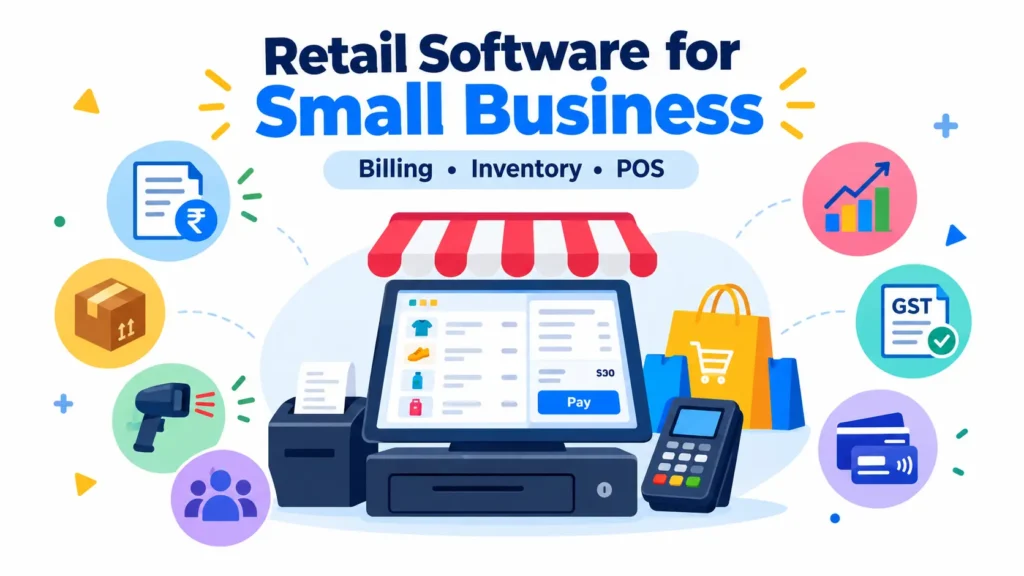
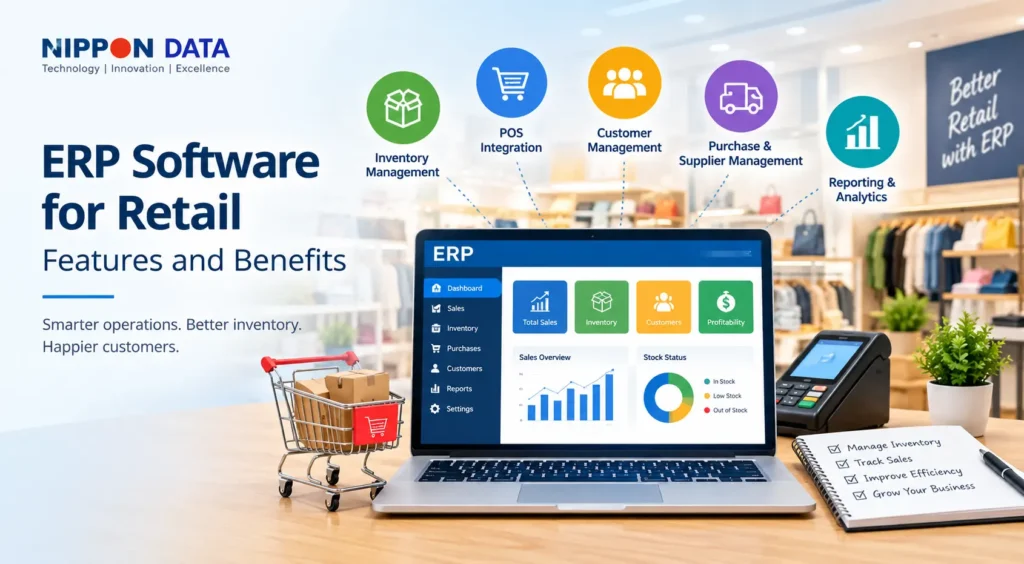
ERP software for the retail industry helps business owners handle sales, inventory, purchases, customers, suppliers, and finances all from one place.It brings together daily retail tasks and gives business owners clear views of how their business is doing.
The best ERP software for retail helps stores cut down on manual tasks, better control stock, increase visibility of sales, and offer better customer service.Retail businesses can use the best retail ERP software to manage single stores, multiple locations, warehouses, and online sales.
What Is ERP Software for the Retail Industry?
ERP software for retail is a type of business management system designed for retail stores, chains, distributors, and growing retail businesses.It connects different departments and stores’ business data in one central system.
Retail ERP software helps businesses manage:
- Product and inventory management
- Sales and billing
- Purchase and supplier management
- Customer information
- Financial accounting
- Multi-store operations
- Reports and business analytics
Instead of using separate tools, retailers can handle important business tasks through one integrated ERP platform.
What Is ERP Software for the Retail Industry?
ERP software for retail is a type of business management system designed for retail stores, chains, distributors, and growing retail businesses.It connects different departments and stores’ business data in one central system.
Retail ERP software helps businesses manage:
- Product and inventory management
- Sales and billing
- Purchase and supplier management
- Customer information
- Financial accounting
- Multi-store operations
- Reports and business analytics
Instead of using separate tools, retailers can handle important business tasks through one integrated ERP platform.
Why Do Retail Businesses Need ERP Software?
Retail businesses handle thousands of products, suppliers, customers, and daily transactions. Doing things manually can lead to mistakes, stock shortages, and delays.
ERP software for the retail industry helps businesses:
- Track inventory across stores and warehouses.
- Reduce errors in billing and data entry.
- Monitor sales and product performance.
- Improve planning for purchases and stock.
- Manage multiple retail outlets.
- Access real-time business reports.
- Improve customer service and control operations.
An ERP system helps retailers make faster decisions using accurate business information.
Key Features of the Best ERP Software for Retail
- Inventory Management
Inventory management is one of the most important features of retail ERP software.
It helps businesses track product availability across stores and warehouses.
Key capabilities include:
- Real-time stock tracking
- Stock transfer between stores
- Low-stock alerts
- Product and SKU management
- Batch and serial number tracking
- Stock adjustment and reconciliation
- Warehouse management
Better inventory control helps retailers avoid overstocking and stock shortages.
Key Features of the Best ERP Software for Retail
The best retail ERP software should support daily retail activities and future business growth. The following features can help retailers improve efficiency and control.
- Inventory Management
Inventory management is one of the most important features of retail ERP software. It helps businesses track product availability across stores and warehouses.
Key capabilities include:
• Real-time stock tracking
• Stock transfer between stores
• Low-stock alerts
• Product and SKU management
• Batch and serial number tracking
• Stock adjustment and reconciliation
• Warehouse management
Better inventory control helps retailers avoid overstocking and stock shortages. - Retail Sales and POS Integration
A retail ERP system can connect with point-of-sale (POS) software to manage sales transactions.
Important features include:
• Fast billing
• Barcode scanning
• Multiple payment options
• Discounts and offers
• Sales returns
• Invoice generation
• Daily sales reports
POS integration helps retailers connect sales data with inventory and accounting records. - Purchase and Supplier Management
Retail businesses need a smooth purchasing process to maintain product availability. ERP software helps manage suppliers and purchase activities from one platform.
Features may include:
• Purchase requisitions
• Purchase orders
• Supplier information
• Goods receipt management
• Purchase invoices
• Supplier payment tracking
• Purchase performance reports
This process helps businesses plan purchases and maintain better supplier relationships. - Multi-Store Management
Retail chains often operate multiple stores in different locations. The best ERP software for retail helps businesses manage these outlets through a central system.
Multi-store ERP features include:
• Store-wise sales reports
• Central inventory visibility
• Stock transfers
• Store performance tracking
• Centralized pricing
• Branch-wise expense management
• Consolidated business reports
Retail managers can compare store performance and identify areas that need attention. - Customer Relationship Management
Customer data helps retailers understand buying patterns and improve customer engagement. Retail ERP software can connect customer information with sales activities.
CRM features may include:
• Customer profiles
• Purchase history
• Loyalty programs
• Customer segmentation
• Personalised offers
• Complaint tracking
• Customer communication
These features help retailers build stronger customer relationships and encourage repeat purchases. - Accounting and Financial Management
ERP software connects retail transactions with financial operations. It helps businesses monitor revenue, expenses, payments, and profitability.
Common accounting features include:
• Sales and purchase accounting
• Accounts payable
• Accounts receivable
• Tax and GST records
• Expense tracking
• Cash flow monitoring
• Profit and loss reports
Integrated accounting reduces duplicate data entry and improves financial visibility. - Product and Pricing Management
Retailers often manage products with different sizes, colours, brands, and categories. A retail ERP system helps businesses maintain consistent product information.
Product management features include:
• SKU creation
• Product categories
• Product variants
• Barcode management
• Price lists
• Discount rules
• Promotional pricing
Accurate product data helps retailers manage pricing and reduce operational errors. - Reporting and Business Analytics
Retail ERP software provides reports that help business owners understand performance.
Useful reports include:
• Daily and monthly sales
• Product-wise sales
• Store-wise performance
• Inventory aging
• Fast-moving products
• Slow-moving products
• Purchase trends
• Profitability reports
These insights help retailers improve stock planning, pricing, and business decisions. - E-commerce and Omnichannel Integration
Many retailers sell products through physical stores and online channels. ERP software can connect these sales channels when the system supports the required integrations.
Possible benefits include:
• Centralised product information
• Unified inventory visibility
• Online order management
• Order fulfilment tracking
• Return management
• Customer data synchronization
This integration helps businesses create a more consistent shopping experience. - Security and User Access Control
Retail ERP systems handle sensitive business and customer information. User access controls help protect important data.
Security features may include:
• Role-based permissions
• User activity tracking
• Approval workflows
• Data backup
• Secure login
• Branch-level access control
Businesses should select an ERP system that matches their security and compliance needs.
Benefits of ERP Software for Retail Businesses
Retail ERP software makes business operations better by connecting sales, inventory, purchasing, and finances.
Better Inventory Control
Retailers can watch stock levels and track products across stores. This helps prevent running out of stock and having too much inventory.
Faster Business Decisions
Real-time reports help managers see sales, stock, and finance performance without waiting for manual reports.
Reduced Operational Costs
Automation cuts down on repetitive work and helps teams complete daily tasks with fewer mistakes.
Improved Customer Experience
Accurate stock info, faster billing, and better customer records help retailers provide smoother service.
Increased Sales Visibility
Retailers can see which products are popular, track sales trends, and understand how each store is performing.
Better Multi-Branch Management
Having all information in one place helps business owners manage different stores and compare their performance.
Improved Financial Control
Integrated accounting helps track payments, expenses, revenue, and profitability.
How to Choose the Best ERP Software for Retail
The right ERP system depends on your business size, store count, product range, and operational needs. Consider these factors before selecting a solution.
| Selection Factor | What to Check |
| Business size | Does the software support your current and future growth? |
| Inventory | Can it manage products, SKUs, warehouses, and stock transfers? |
| POS integration | Can it connect with your billing system? |
| Multi-store support | Can you manage multiple outlets from one platform? |
| Accounting | Does it support your financial and tax requirements? |
| Reporting | Does it provide useful sales and inventory reports? |
| Integration | Can it connect with your existing business tools? |
| Security | Does it offer role-based access and data protection? |
| Support | Does the provider offer training and technical support? |
| Total cost | Does the pricing match your budget and expected business value? |
A good ERP solution should solve current business problems while supporting long-term growth.
How Retail ERP Software Improves Inventory and Sales
Retail ERP software links inventory information with sales and purchasing activities.When a customer buys something, the system can update stock levels if the POS and ERP systems work together.
This connection helps retailers:
- Know which products are in high demand.
- Plan purchases based on sales trends.
- Reduce errors in inventory records.
- Keep track of stock across different locations.
- Improve product availability.
- Understand sales performance.
Retailers should set up inventory rules and integrations properly to get accurate information.
Why Choose Nippon Data for Retail ERP Solutions?
Nippon Data offers various business technology and software solutions for different industries.Its NEWTON ERP platform supports business process management and can help organizations improve their ability to see and manage operations.For retail businesses, an ERP solution should focus on inventory control, sales management, purchasing, accounting, reporting, and business integration.
Nippon Data can assess business needs and help identify suitable ERP capabilities for retail operations.
Businesses can explore retail ERP requirements and discuss their needs with the Nippon Data team.
Conclusion
ERP software for the retail industry helps businesses connect sales, inventory, purchasing, accounting, and customer management in one system. The best ERP software for retail should improve operational visibility, reduce manual work, and support business growth. By selecting the best retail ERP software for your needs, retailers can improve stock control, manage multiple stores, and make better data-driven decisions.
Looking for a retail ERP solution? Explore how Nippon Data’s NEWTON ERP can support your business requirements.