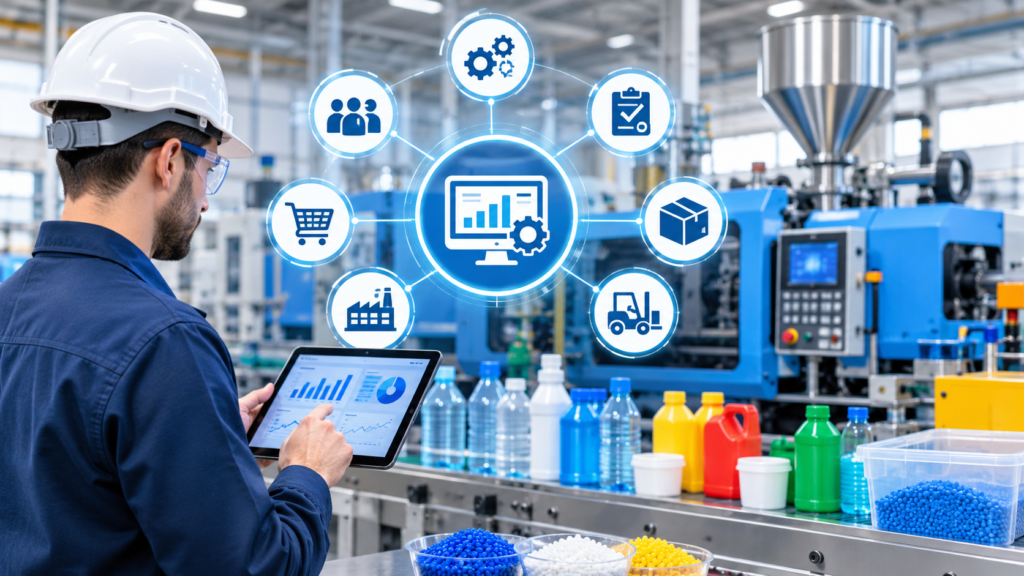
The plastic manufacturing industry is growing rapidly, but managing production, raw materials, inventory, quality and customer orders is not always easy. Manufacturers often deal with fluctuating raw material prices, production delays, machine downtime, wastage and increasing customer expectations.
Managing all these activities through separate software or spreadsheets can make daily operations complicated. This is where an ERP system for the plastic manufacturing industry can make a real difference.
A specialised ERP solution brings different business operations together, helping manufacturers manage production, monitor inventory, control costs and make better business decisions.
In this blog, we will explore how ERP software helps plastic manufacturers improve productivity, reduce operational challenges and manage their businesses more efficiently.
What Is ERP Software for the Plastic Manufacturing Industry?
ERP (Enterprise Resource Planning) software is a business management system that connects different departments through a single platform.
For plastic manufacturers, ERP software helps manage the complete manufacturing process, from purchasing raw materials to production planning, quality inspection, inventory management and final product delivery.
Whether a business manufactures plastic bottles, containers, pipes, packaging materials, automotive plastic components or household products, an ERP system provides better visibility and control over daily operations.
Why Do Plastic Manufacturing Companies Need ERP Software?
Plastic manufacturing involves several interconnected processes. Even a small mistake in raw material planning, production scheduling or inventory management can affect overall productivity.
Here are some common challenges faced by plastic manufacturers:
- Difficulty managing plastic raw materials and supplier costs.
- Excessive material wastage during production.
- Poor production planning and machine utilisation.
- Inaccurate inventory records.
- Quality control issues and product rejection.
- Delays in customer orders and deliveries.
- Difficulty tracking manufacturing costs.
An integrated ERP system helps address these challenges by automating processes and providing real-time business information.
Key Features of ERP Software for Plastic Manufacturing
Choosing the right ERP software is important for manufacturers who want to improve operational efficiency. Here are the essential features that can support plastic manufacturing businesses.
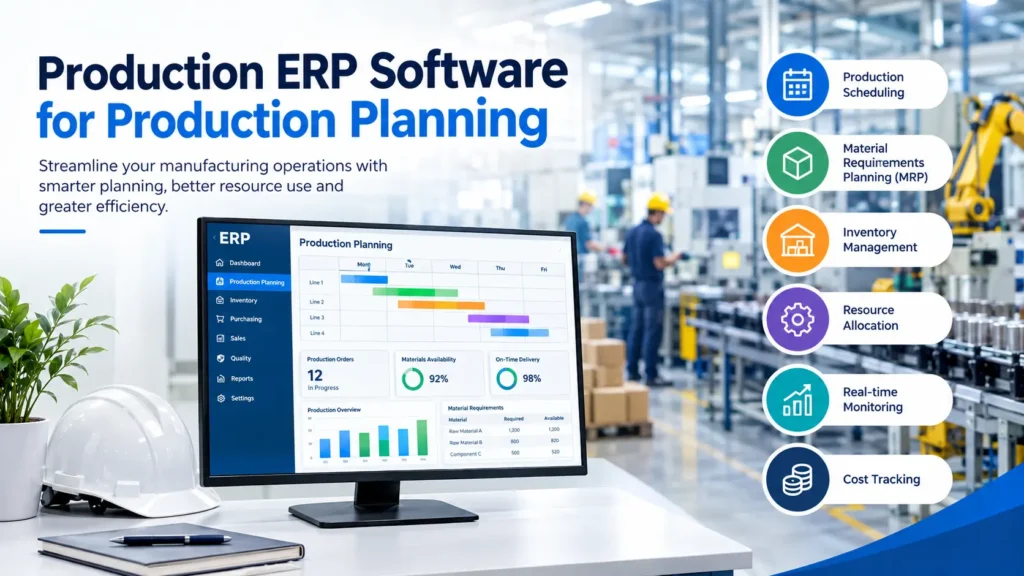
1. Plastic Manufacturing Production Planning and Scheduling
Production planning is one of the most important activities in a manufacturing business.
ERP software helps manufacturers plan production schedules according to customer orders, available raw materials, machine capacity and delivery deadlines.
It also helps production managers monitor ongoing manufacturing activities and identify potential delays.
Benefits include:
- Better production scheduling.
- Improved machine utilisation.
- Reduced production delays.
- Better coordination between departments.
2. Raw Material and Inventory Management for Plastic Manufacturers
Plastic manufacturers regularly work with raw materials such as polypropylene (PP), polyethylene (PE), PVC, PET and other polymers.Managing these materials efficiently is essential because fluctuations in prices and stock availability can directly affect production costs.
An ERP system helps businesses track raw material purchases, stock levels, material consumption and warehouse movements. It can also support batch-wise inventory tracking and stock alerts, helping businesses avoid unnecessary purchases and material shortages.
3. Injection Moulding and Extrusion Process Management
Many plastic manufacturing businesses depend on injection moulding, blow moulding and extrusion processes.
Managing these operations manually can make it difficult to track machine performance, production quantities and material consumption.
ERP software can help manufacturers monitor:
- Machine-wise production schedules.
- Job work and production orders.
- Material consumption.
- Production output.
- Machine downtime.
- Manufacturing costs.
This gives managers better visibility into production activities and helps identify areas where improvements are needed.
4. Quality Control Management in Plastic Manufacturing
Product quality plays an important role in maintaining customer relationships and meeting industry requirements.
ERP software helps manufacturers record quality inspection results at different production stages.
Businesses can maintain quality records for raw materials, work-in-progress products and finished goods.
Important quality management activities include:
- Raw material quality inspection.
- In-process quality checks.
- Finished product inspection.
- Rejection and defect tracking.
- Batch and production traceability.
These processes help manufacturers maintain consistent product quality and reduce avoidable production losses.
5. Plastic Manufacturing Costing and Wastage Management
Manufacturing costs can increase because of material wastage, machine downtime, labour expenses and changing raw material prices.ERP software helps businesses calculate production costs by considering material consumption, labour, machine expenses and other manufacturing overheads.
Manufacturers can also monitor scrap generation and rejected materials to understand where wastage is occurring.
This information supports better cost control and more informed pricing decisions.
6. Purchase and Supplier Management ERP
Managing multiple suppliers and purchase orders can become challenging as a manufacturing business grows.
ERP software helps streamline purchasing activities, supplier records, purchase orders, material receipts and payment tracking. It also gives businesses better visibility into supplier performance, helping purchasing teams make informed decisions.
7. Sales Order and Dispatch Management
Meeting customer delivery commitments is essential for plastic manufacturing companies.
An ERP system connects sales orders with inventory and production planning, making it easier to understand material availability and expected delivery timelines.
It also helps manage finished goods, dispatch schedules, invoices and customer order records.
How ERP Software Reduces Manufacturing Wastage in the Plastic Industry
Material wastage directly affects manufacturing profitability.
In plastic manufacturing, wastage may occur because of incorrect machine settings, defective products, excess material consumption, production errors or poor planning.
ERP software helps manufacturers monitor material usage against production requirements and identify differences between planned and actual consumption.
With accurate production records, businesses can:
- Monitor raw material consumption.
- Track rejected and defective products.
- Identify recurring production issues.
- Analyse scrap generation.
- Improve production planning.
The result is better resource utilisation and improved control over manufacturing expenses.
Benefits of Implementing ERP Software in Plastic Manufacturing
Implementing the right ERP solution can improve several areas of business operations.
| ERP benefit | Business impact |
| Production planning | Better scheduling and coordination |
| Inventory management | Improved stock accuracy |
| Quality management | Better product consistency |
| Cost management | Improved manufacturing cost visibility |
| Supplier management | More organised purchasing |
| Machine monitoring | Better production visibility |
| Reporting and analytics | Informed business decisions |
The biggest advantage is that different departments can work with connected information instead of maintaining separate records.
How to Choose the Best ERP Software for Plastic Manufacturing?
Not every ERP solution is designed for the specific requirements of plastic manufacturers. Before selecting an ERP system, businesses should evaluate their production processes and operational needs.
Consider the following factors:
Industry-specific functionality: Choose software that supports your manufacturing processes, including injection moulding, extrusion or blow moulding, where relevant.
Inventory and batch tracking: Check whether the system can manage raw materials, finished goods, scrap and batch-level information.
Production management: Look for production planning, scheduling, material consumption and machine utilisation features.
Quality management: Ensure the software supports inspection records, rejection tracking and quality reporting.
Scalability: Select an ERP solution that can support business growth, additional production units and increasing order volumes.
Reporting and integration: The system should provide useful reports and integrate with other essential business applications.
Why Choose Newton ERP for Plastic Manufacturing?
Managing a plastic manufacturing business requires proper coordination between production, inventory, purchasing, sales and finance.
Newton ERP helps businesses bring important operational activities together through an integrated ERP platform.With centralised business information and organised workflows, manufacturers can improve visibility across their operations and manage everyday business activities more effectively.
Newton ERP can support manufacturing businesses looking to improve:
- Production and process management.
- Inventory and raw material tracking.
- Purchase and supplier management.
- Sales and order management.
- Business reporting and operational visibility.
The right ERP implementation can help plastic manufacturers build more organised, efficient and scalable operations.
Conclusion
The plastic manufacturing industry requires accurate planning, effective inventory management, consistent quality and proper cost control. Managing these activities separately can create unnecessary operational challenges.An integrated ERP system for plastic manufacturing helps businesses connect their operations, improve production visibility and make informed decisions.
For manufacturers planning to improve efficiency and prepare for future growth, investing in the right ERP solution can be an important step towards building a more organized business. Looking to improve your plastic manufacturing operations? Explore how Newton ERP can help streamline your manufacturing processes.