Managing a supply chain involves much more than moving products from one location to another. Businesses need to purchase materials, manage suppliers, maintain inventory, plan production, process orders, manage warehouses, and deliver products on time.
When these activities are handled through separate systems or spreadsheets, it can become difficult to get a clear view of what is happening across the business.
This is where ERP software for supply chain management can make a significant difference. An ERP system connects different business functions and brings important information into one system. Teams can use the same data to plan purchases, monitor stock, manage production, process orders, and track deliveries.
For growing manufacturing, distribution, and retail businesses, this connected approach can help improve operational control and reduce unnecessary delays.
What Is ERP Software for Supply Chain Management?
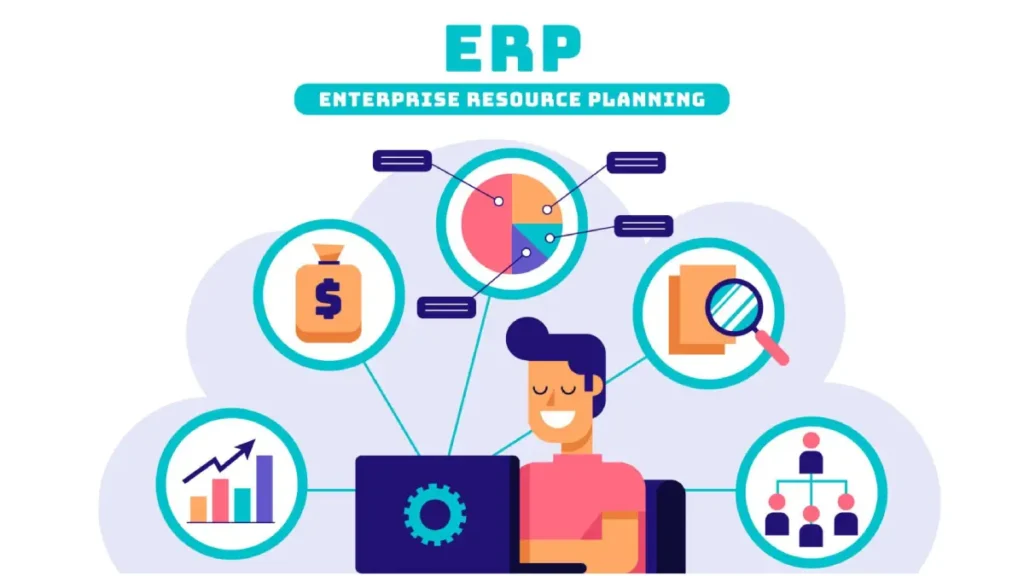
ERP software for supply chain management connects key supply chain activities with other business functions such as finance, sales, purchasing, inventory, production, and customer management.
Instead of maintaining separate information for purchasing, inventory, production, and sales, an ERP system allows teams to work with connected business data.
For example, when sales demand increases, the purchasing and production teams can use updated information to review inventory levels and plan material requirements. This reduces the need to collect information manually from different departments.
The main objective is simple: give the business better visibility and control over its supply chain operations.
How ERP Improves Supply Chain Management
1. Better Inventory Management
Inventory is one of the most important parts of supply chain management.
Too much inventory can increase storage costs and block working capital. Too little inventory can result in production delays, stockouts, and missed customer orders.
ERP software helps businesses monitor inventory levels, stock movements, purchases, consumption, and availability from a central system.
Teams can use this information to understand:
- What stock is currently available
- Which materials are running low
- What has been purchased
- What has been consumed
- Which products are moving faster
- Where inventory is stored
This can help businesses make more informed inventory decisions.
2. Improved Procurement Management
Purchasing teams need accurate information before placing orders with suppliers.
An ERP system can connect purchasing requirements with inventory, production plans, sales orders, and supplier information.
This allows procurement teams to review requirements before placing purchase orders.
It can also help businesses maintain supplier information, purchase history, order status, and pricing details in one place.
As a result, purchasing becomes more organized and easier to monitor.
3. Real-Time Supply Chain Visibility
One of the biggest challenges in supply chain management is a lack of visibility.
When different departments maintain separate records, management may not have a complete picture of inventory, orders, production, or purchasing.
ERP software brings information from different business functions together.
Management can get a clearer view of:
- Inventory
- Purchase orders
- Sales orders
- Production
- Supplier activities
- Warehouse operations
- Dispatches
- Receivables and payables
This connected information can help managers identify problems earlier and take appropriate action.
4. Better Production Planning
For manufacturing companies, production planning depends heavily on the availability of raw materials, sales requirements, inventory, and production capacity.
ERP software can connect these areas and help production teams plan their activities more effectively.
For example, if a company receives new customer orders, the production team can review current inventory and material requirements before preparing the production plan.
This can help reduce unnecessary production delays and improve coordination between sales, purchasing, inventory, and production teams.
5. Improved Warehouse Management
Warehouse operations involve receiving materials, storing products, moving stock, picking orders, and preparing goods for dispatch.
Without proper tracking, businesses can face problems such as incorrect stock levels, misplaced materials, or delays in order processing.
An ERP system can provide better visibility into stock movement and warehouse transactions.
Businesses can use ERP software to manage:
- Stock receipts
- Stock transfers
- Material issues
- Finished goods
- Warehouse locations
- Dispatches
- Inventory levels
This makes it easier for warehouse and supply chain teams to track inventory movement.
6. Better Order and Delivery Management
Customers expect accurate order information and timely deliveries.
ERP software can connect sales orders with inventory, production, warehouse, and dispatch activities.
When an order is received, teams can check whether the required products are available or need to be produced.
This helps businesses coordinate different departments around customer requirements.
Better coordination can also help reduce communication gaps between sales, production, warehouse, and logistics teams.
7. Supplier Management
Suppliers have a direct impact on supply chain performance.
Businesses need to monitor supplier information, purchase history, delivery schedules, pricing, and material quality.
ERP software provides a central place to maintain supplier-related information.
With better records, businesses can review supplier performance and make purchasing decisions based on available business data.
8. Reduced Manual Work
Many businesses still depend heavily on spreadsheets, emails, and manual data entry for supply chain activities.
As the business grows, maintaining these processes becomes difficult.
ERP software can automate or simplify several routine activities, including:
- Purchase orders
- Inventory updates
- Sales order processing
- Stock transfers
- Production planning
- Reports
- Approval workflows
Reducing repetitive manual work allows employees to spend more time on planning and problem-solving.
Key Benefits of ERP for Supply Chain Management
A well-implemented ERP system can help businesses achieve several operational benefits:
- Better inventory control
- Improved procurement planning
- Greater supply chain visibility
- Better production planning
- Improved warehouse management
- Faster access to business information
- Reduced manual processes
- Better coordination between departments
- Improved order management
- Better supplier management
- More informed decision-making
The actual results depend on the company’s processes, ERP implementation, data quality, user adoption, and system configuration.
Why Manufacturing Companies Need Supply Chain ERP
Manufacturing businesses often have more complex supply chains because they need to manage raw materials, suppliers, production processes, work-in-progress, finished goods, and customer orders.
A manufacturing ERP system can connect these activities.
For example:
Customer Order → Production Planning → Material Requirement → Purchase → Inventory → Production → Quality → Finished Goods → Dispatch
When these activities operate through connected systems, teams can work with a common flow of information instead of maintaining separate records.
This can make it easier to identify where a delay or supply issue is occurring.
How to Choose Supply Chain ERP Software
Businesses should not select ERP software simply because it has a long list of features.
The system should match the company’s actual processes and future requirements.
Before selecting an ERP system, consider:
Business Requirements
Understand your current supply chain processes and identify areas where you face delays, manual work, or lack of visibility.
Integration
Check whether the ERP can connect with existing business systems and applications.
Scalability
The software should support business growth, additional locations, products, users, and transactions.
Reporting
Look for useful reports and dashboards that help management understand inventory, purchasing, production, sales, and supply chain performance.
Industry Requirements
Manufacturing, retail, distribution, and other industries have different supply chain requirements. Choose software that can support your business model.
How NEWTON ERP Supports Supply Chain Operations
NEWTON ERP from Nippon Data is designed to connect different business functions through a unified ERP platform.
For businesses managing purchasing, inventory, production, sales, finance, and other operations, an integrated ERP approach can help bring important information together.
Businesses can evaluate NEWTON ERP based on their specific operational requirements and identify the modules and workflows that are relevant to their organization.
Conclusion
Supply chain management becomes more difficult as a business grows. More products, suppliers, orders, warehouses, and transactions mean more information needs to be managed every day.
ERP software for supply chain management provides a connected platform where businesses can manage important processes such as procurement, inventory, production, warehousing, sales, and order fulfillment.
The biggest advantage is not simply having another software system. It is having connected business information that helps teams understand what is happening and make better operational decisions.
For businesses looking to improve supply chain visibility, reduce manual processes, and connect different departments, an ERP system can become an important part of their digital transformation strategy.