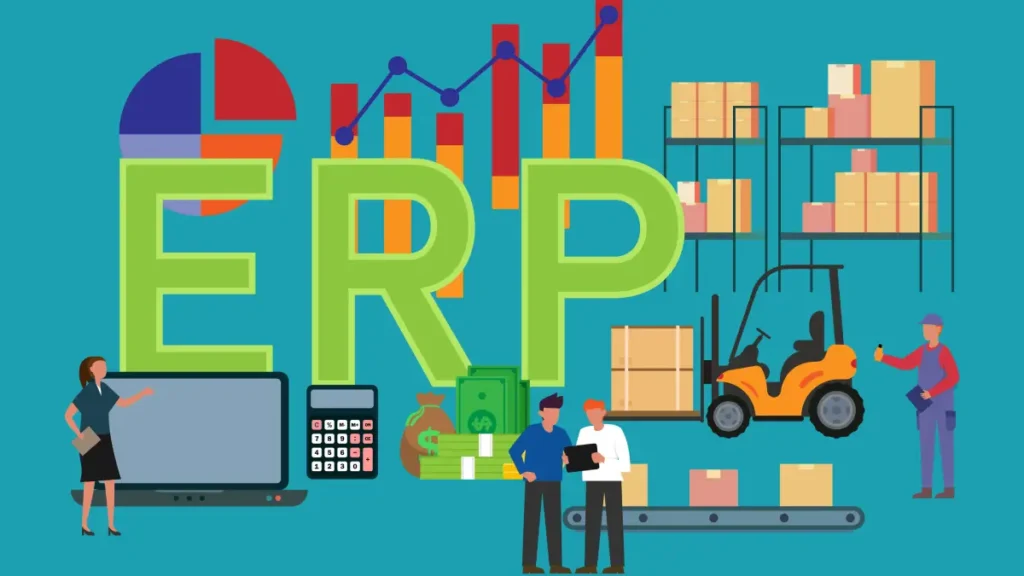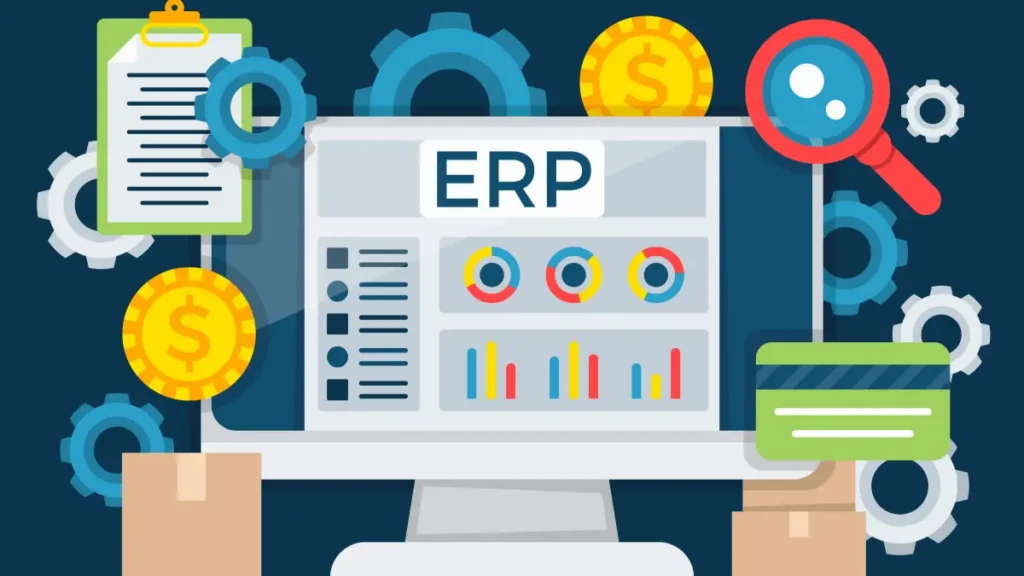

Businesses have been relying on traditional ERP systems to coordinate their day-to-day activities over the years. The ERP systems facilitated businesses to manage finance, human resources, supply chain, inventory, and reporting using a single platform. These systems were convenient in situations where business operations were less hectic, and volumes of data could be managed.
In the present day, companies exist in a rapidly changing digitalized environment. Markets are dynamic, customer behaviors evolve daily, and big volumes of data are being generated every second. Traditional ERP systems find it difficult to keep pace in this environment. That is why firms are moving away from the traditional ERP towards the intelligent autonomous decision engines.
What Is a Traditional ERP System?
A traditional ERP system is a software that assists businesses in storing data and adhering to rigid processes. It functions according to pre-established guidelines. Considering that, it can capture sales, issue payroll, stock, and report.
The primary aim of the ERP systems is to arrange the data and streamline operations. Nevertheless, people remain important in decision-making. Managers read reports, calculate trends, and make decisions on what to do. It is time-consuming and may cause delays or errors, particularly in cases where the data is rapidly changing.
Why Traditional ERP Is No Longer Enough?
The problems of modern business cannot be addressed by traditional ERP systems. Data is now available in numerous sources through websites, mobile applications, social media, sensors, and cloud platforms. Conventional ERP systems handle information in batches and give reports after the occurrence of events.
Another major issue is speed. Companies must have real-time information to act on customer demands, supply chain shocks, and market dynamics. Older ERP systems are hard to adapt and cannot be updated manually, and even the upgrades and additions need human approval at each stage. An increase in competition means that each company must have smarter systems that do not merely store information.
What Are Intelligent Autonomous Decision Engines?
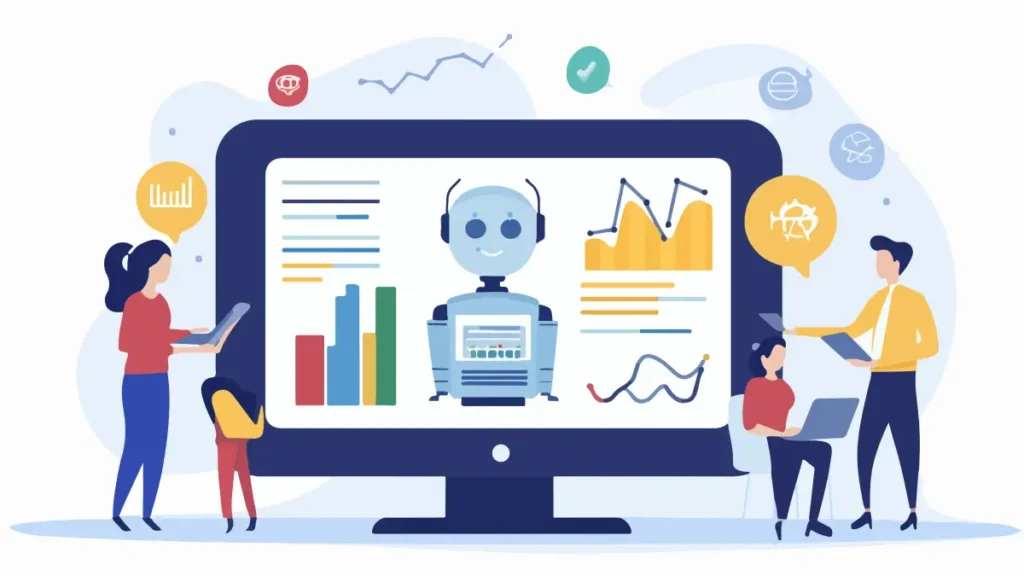
Intelligent autonomous decision engines are complex systems that make their own decisions, with the assistance of artificial intelligence, machine learning, and automation. Such systems do not simply display information. They analyze it, learn about it and apply it in real time.
In contrast to the conventional ERP, autonomous decision engines are able to foresee the future, propose the most appropriate action and even perform with humans out of the frame.
They keep learning with new information and advance with time. This transformation enables companies to transition to proactive and predictive decision making as opposed to reactive decision making.
Key Differences Between ERP and Decision Engines
| Aspect | Traditional ERP Systems | Intelligent Decision Engines |
| Decision logic | Works on fixed rules | Uses adaptive and learning models |
| Workflow | Manual and human driven | Automated and self executing |
| Data usage | Processes historical data | Uses real time and live data |
| Reporting | Periodic and delayed reports | Instant insights and actions |
| Decision making | Humans analyze and decide | System decides with minimal oversight |
| Flexibility | Limited and rigid | Highly flexible and adaptive |
| Speed | Slower response time | Fast and real time responses |
| Accuracy | Prone to human errors | Higher accuracy through AI models |
| Scalability | Hard to scale | Easily scalable with growing data |
Technologies Behind Autonomous Decision Engines
In these systems, artificial intelligence is significant. Machine learning assists systems to learn using the previous data and enhance their predictions. Predictive analytics assists companies in projecting demand, finding risks and making plans.
Robots perform transactions like approvals, notifications and modifications instantly. Cloud computing enables these systems to expand without any problem and handle vast volumes of information acquired elsewhere. A combination of these technologies will convert raw data into intelligent actions.
Benefits of Intelligent Autonomous Decision Engines
- Enables faster decision-making with real-time insights
- Reacts instantly to market and data changes.
- Minimizes human errors through automation of repetitive and intricate activities.
- Reduces operation expenses through the reduction of manual labor.
- Enhances the productivity of every department.
- Improves customer experience by receiving personalized services.
- Helps in responding fast and precisely to the customer’s needs.
- Enhances risk control through the identification of abnormal trends.
- Eliminates problems before they escalate into serious issues.
Real World Business Use Cases
These use cases show how intelligent systems go far beyond what traditional ERP can offer:
- In finance, decision engines can detect fraud, manage cash flow, and automate compliance checks.
- In supply chains, they can predict demand, optimize inventory, and avoid stock shortages.
- In human resources, they help with hiring decisions, workforce planning, and performance analysis.
- In sales and marketing, they personalize offers, optimize pricing, and forecast revenue.
- In manufacturing, they support predictive maintenance and improve product quality.
Challenges in Making the Shift
- It is necessary to keep the data accurate and of high quality.
- Mistaken automated decisions can be made due to inaccurate data.
- The implementation of intelligent systems with the existing ERP needs planning.
- It requires training of the employees to have confidence in the new tools.
- The key concerns are data security, privacy, and transparency.
- These problems can be overcome with the right approach.
How Businesses Can Prepare
Preparation can be made by the businesses that need to identify the constraints of their current ERP systems. It is critical to establish a robust and correct database. Intelligent solutions need to be selected by the companies according to their business objectives, and employees need to be trained to utilize these solutions. It is better to begin with small pilot projects and gradually increase to intelligent decision systems to facilitate a smooth and low-risk transition.
The Future of Enterprise Decision Making
The intelligent and autonomous decision engines are the future of business. Such systems will keep on advancing, being more perfect and dependable. The human functions will change to strategic management and not manual decision-making. The early use of smart systems will provide companies with speed, flexibility and competitive advantage.
Conclusion
The transition of the conventional ERP into the smart autonomous decision engines is a significant change in the way business is conducted today. Whereas ERP systems assist in the manipulation of data, intelligent systems convert such data into real-time activities and decisions. They assist companies in their work in a quicker manner, decreasing mistakes, expenses, and enhancing customer satisfaction.
The competitive and data-driven world can slow the growth when using only the traditional systems. Flexibility, accuracy and long-term benefit are obtained by companies that adopt intelligent decision engines. It is time to go beyond standard ERP and make smarter decisions. Transform your business today and make it future-proof.