


Customers today engage businesses in numerous ways, even in the current digital world, before making a decision. One can learn about a brand on social media, go to the site, chat via WhatsApp, send emails, and eventually make a purchase by phone or form. These are not individual interactions with the customers. To them, it is a single experience known as an Omnichannel Customer journey.
To handle this journey, businesses require a system linking all the interactions with the customers. This is where the CRM software becomes very important. It assists companies in providing unbroken communication, faster services, and improved general customer experience.
About Omnichannel Customer Journeys
Omnichannel Customer journey refers to delivering a seamless and integrated customer experience on all media. When customers reach out to a business via Instagram, email, chat on the site, or phone, they want the same quality of service.
A good number of businesses have several channels but do not integrate them. This causes frustration in customers. They must restate their concerns, rephrase their needs, and wait more to get responses. The experience is fragmented when channels are operated separately. With CRM software, it is easy to make these touchpoints linked and maintain the customer experience.
What Is CRM Software?
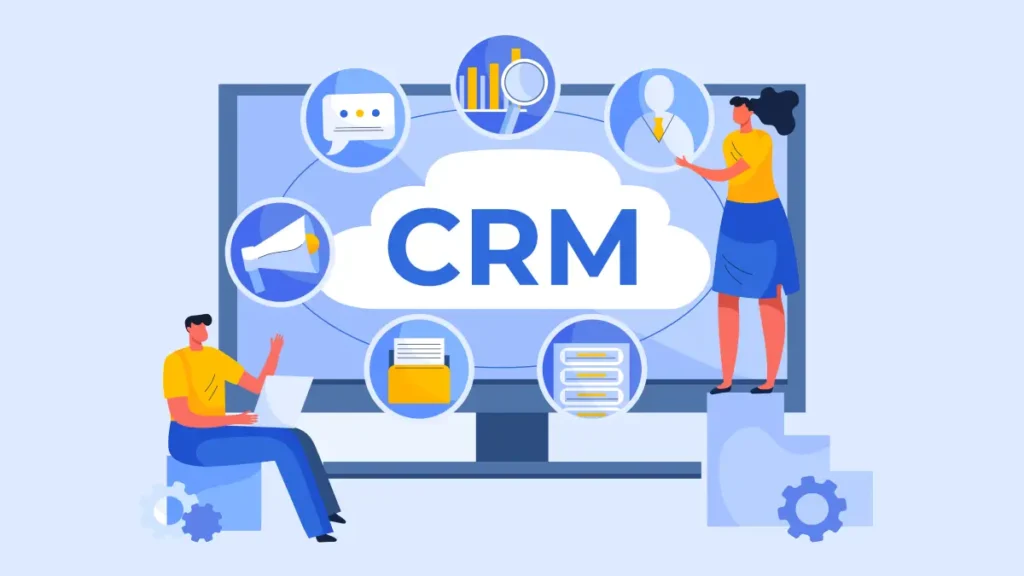
CRM software is an application that assists businesses in controlling customer interactions within a single location. It contains valuable information such as names, contact information, history of conversation, purchases, and support inquiries. All the customer touchpoints are also linked together using CRM software, including email, social media, chat on the website, and phone calls, to form a smooth Omnichannel Customer experience.
Most companies utilize numerous channels and find it difficult to maintain the links among them. CRM software is a solution to this issue because it distributes customer data to teams, eliminates duplication, enhances responsiveness, and assists businesses in providing consistent and personalized customer experiences.
How CRM Software Connects Every Customer Touchpoint?
Customers now move across platforms. They could send an email through WhatsApp, respond to an email and call the sales team later. These interfaces would not be consolidated without an appropriate system.
All these touchpoints are simultaneously unified with CRM software. All the conversations are stored in one profile of a customer. The customer history is easy to look at and the teams can confidently respond with tools such as Newton CRM. This enhances transparency, expediency and precision of all departments.
Creating Seamless Omnichannel Experiences with CRM
One of the biggest strengths of CRM software is its ability to create seamless customer experiences.
- Unified Customer View: CRM establishes a single view of every Omnichannel Customer, illustrating all interactions with customers.
- Personalized Communication: Under CRM software, companies are able to deliver messages that are relevant and timely rather than being generic.
- Smooth Team Collaboration: Sales, marketing, and support teams cooperate with the help of mutual customer information.
- Faster Issue Resolution: CRM software supports resolve issues faster since they are aware of the customer background.
- Consistent Brand Communication: The customers are given equal quality response on all channels which establish trust and loyalty.
Role of Automation in CRM Software
The new CRM software has features of automation which saves labor. The reminders of follow ups, tracking of leads, and task assignments occur automatically. This is to make sure no Omnichannel Customer gets left behind.
The intelligent automation can be used in many platforms like Newton CRM to make the business connect the customers at the most appropriate time with no additional pressure.
Business Benefits of CRM for Omnichannel Strategy
- CRM software enables organizations to handle all the Omnichannel Customer interactions in a single platform.
- It helps to enhance customer satisfaction as it allows responding faster and more efficiently.
- The sales teams are able to monitor the leads, follow-ups, and conversions more effectively.
- Real customer data and behavior help marketing teams to develop superior campaigns.
- Support departments solve problems at a quicker rate due to the availability of the entire customer history.
- CRM software lowers the labor-intensive work and enhances the productivity of other teams.
- Clear reports and insights help businesses make smarter decisions.
- An effective CRM system facilitates sustainability and customer retention.
Problems Businesses Face Without CRM Software
- Data regarding customers remains scattered, and it is difficult to manage Omnichannel Customer interactions.
- The same information is repeated by the customers because of the isolated communication channels.
- The follow-ups and valuable opportunities are missed by sales and support teams.
- Customer trust is damaged because the responses are sluggish and inconsistent.
- A lack of visibility in data will result in making poor decisions and slower business expansion.
Choosing the Right CRM Software
- Select CRM software that is accessible and does not require technical skills.
- Find automation options that will allow you to control follow-ups, tasks, and reminders.
- Make sure the CRM facilitates Omnichannel Customer interactions via email, calls, and messaging platforms.
- Select a scalable solution that can grow with your business needs.
Conclusion
In the modern interlinked digital world, CRM software is essential in servicing customer relationships. It assists businesses in structuring data, enhancing communication, and providing consistent Omnichannel Customer experiences.
CRM helps to respond quicker and make decisions by bridging the teams and the customer touchpoints. Since customers are increasingly demanding more, the appropriate CRM strategy will aid companies to remain structured, earn trust, and take a confident step towards long-term growth.