


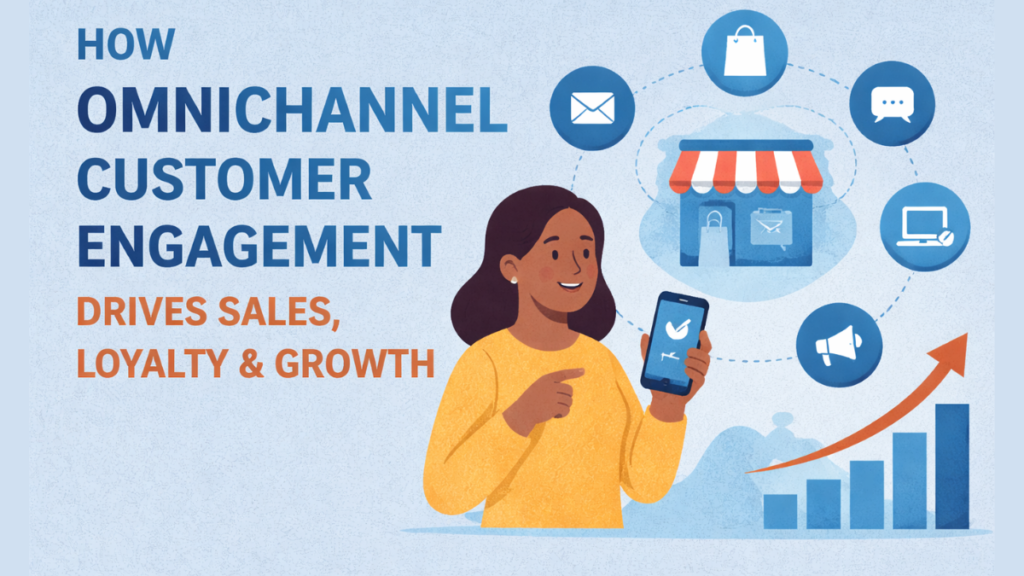
The customers have many associations with brands. They shop, use mobile apps, chat on WhatsApp, check their mail, scroll on Facebook, and sometimes go to physical stores. They desire that same level of experience all the time.
That is why the concept of omnichannel customer engagement matters now. It helps businesses to offer an integrated customer experience that enhances sales, customer loyalty, and the long-term growth of the business.
Why customer engagement matters in omnichannel marketing?
Contemporary clients demand prompt delivery and regular communication. When a brand responds using different languages on email and WhatsApp, then the customers lose their trust. Omnichannel marketing addresses this problem by ensuring that all interactions of the customers are interrelated.
A strong omnichannel customer engagement strategy:
- Improves customer experience
- Builds trust across channels
- Reduces confusion
- Keeps customers engaged longer
What is Omnichannel Customer Engagement?
Omnichannel customer engagement means contacting the customers in different channels during the same journey. Platforms do not separate customer information or communications. Customer information and communications remain integrated between platforms.
An example is where a customer can see products online and ask questions through WhatsApp, and purchase them through a mobile application. It is a continuous, smooth process. This combined process makes customers happier and helps boost sales results.
Single Channel vs Multi-Channel vs Omnichannel Approach
| Approach | How it works | Customer experience | Impact on sales and loyalty |
| Single channel | Customers interact through only one platform | Limited and rigid experience | Low engagement and fewer repeat purchases |
| Multi channel | Multiple platforms are used, but not connected | Inconsistent and confusing | Moderate sales but weak customer loyalty |
| Omnichannel | All platforms are connected and share data | Smooth, consistent, and personal | Higher sales, strong loyalty, and long-term growth |
How Omnichannel Customer Engagement Helps Increase Sales
Customers can buy easily, and therefore, sales increase. The omnichannel customer interaction will eliminate frustration in the purchasing process and assist customers at all stages.
It helps businesses:
- Respond faster to customer queries
- Reduce cart abandonment
- Send timely reminders and follow-ups
- Offer relevant product suggestions
Customers take a shorter time to make purchases and make more purchases when they feel supported. This directly impacts increasing sales and revenue.
Building Customer Loyalty with Consistent Experiences
When people feel like they are heard and that they are special, customer loyalty rises. Omnichannel engagement also means that customers should be equally served in each channel.
Benefits include:
- Personalized communication
- Faster issue resolution
- Consistent brand messaging
- Better post-purchase support
The customers become loyal to a brand when they believe in it. The brand is also recommended by loyal customers, which contributes to the business development as well.
Role of Personalization in Omnichannel Engagement
Omnichannel customer engagement has a potent element of personalization. It assists the brands in providing communications that are pertinent rather than generic.
Examples include:
- Product recommendations based on past purchases
- Order updates on preferred communication channels
- Special offers based on customer behavior
Personalized experience improves interaction, customer relationships, and the customer lifetime value.
How Omnichannel Engagement Drives Business Growth
Omnichannel interaction boosts business development in the long term since it boosts client retention. Maintaining customers is cheaper than acquiring new customers. Repeat customers can spend more and last longer.
Connected customer data helps businesses:
- Understand customer behavior
- Improve marketing strategies
- Enhance customer support
- Make smarter business decisions
Key Channels used in Omnichannel Customer Engagement
A strong omnichannel strategy connects all customer touchpoints, such as:
- Website and mobile applications
- Email marketing
- Social media platforms
- WhatsApp and live chat
- Call centers and physical stores
When all these channels work together, customers enjoy a smooth and reliable experience.
Common Challenges in Omnichannel Engagement
Certain businesses have issues with disconnected systems and scattered data. Independent teams will result in a lack of consistency in communication and a low customer experience.
The issues could be addressed with the help of the appropriate omnichannel tools, centralization of customer data, and training of teams.
Best Practices for Successful Omnichannel Customer Engagement
Small changes can lead to huge changes. To develop a successful omnichannel engagement strategy:
- Store all customer information on a single system.
- Maintain consistent messaging across channels
- Train teams to deliver better customer experience
- Focus on customer needs, not just sales
- Measure performance and improve regularly
Final Thoughts
The omnichannel customer engagement is no longer a choice. Modern businesses cannot do without it. It helps increase sales and customer loyalty, and the long-term development of the business.
The brands that are concerned about the positive customer experience on all platforms stay competitive. Customers would repeatedly return to the brand when they feel connected and appreciated by it everywhere.