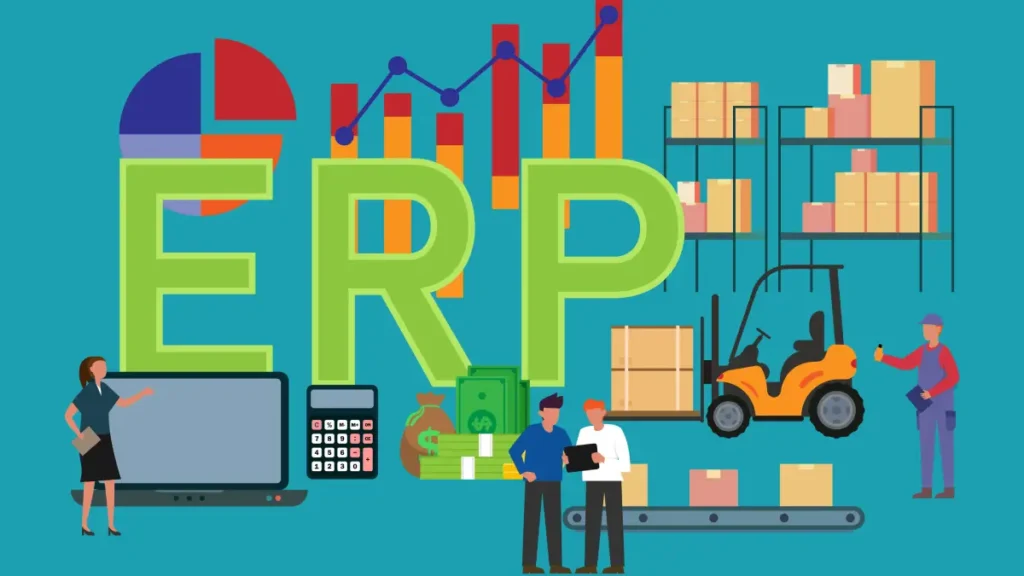
Supply chain and logistics is one of the most difficult challenges to manage in business. Everything should be running smoothly, starting with the purchase of raw material, storage of the products, movement of orders and delivery of the goods at the right time. Errors occur when the systems involved in business are manual or separated software. Delays increase. Costs rise. ERP has a strong role to play here. ERP assists companies to handle all their supply chain and logistics in a clear, straightforward, and effective manner.
Common Challenges in Supply Chain and Logistics Without ERP
Handling the supply chain without ERP can be full of day to day issues. Lack of connections in the systems makes work slow, confusing and expensive. The main problems that businesses encounter are:
- No real time inventory visibility: Firms are not aware of actual stock positions and as a result, overstocking or unexpected stock-outs occur.
- Frequent manual errors: Manual data entry leads to order, invoices, and inventory record errors.
- Delayed procurement and purchasing: Purchase orders are made tardy, which translates to delays of production or delivery.
- Poor coordination between teams: Sales, warehouse, logistics teams and finance teams do not share information.
- Inefficient warehouse operations: Goods become difficult to find, picking and packing become more time-consuming, and mistakes are more frequent.
- Lack of shipment tracking: The companies are unable to track deliveries, which results in missed delivery and dissatisfied clients.
- Higher operational costs: Additional storage, desperate purchases and ineffective transportation add to the overall expenses.
- Limited decision making insights: Managers lack clear information in order to plan, predict demand, or enhance performance.
What Is ERP and How It Fits Into Supply Chain Management
ERP is a software system which is used to bridge all the business processes to a single platform. It unites purchasing, inventory, warehousing, logistics, sales and finance. ERP enables a company to operate on a single system as opposed to having various systems. Information recorded in a single department is immediately accessible by others. This enhances improved coordination and less manual work. ERP forms a one-stop shop of true information of the whole supply chain.
How ERP Simplifies Procurement and Supplier Management
The supply chain commences with procurement. Purchasing is made easy and systematic by ERP. It will automatically create purchase orders on reaching a minimum stock level. All supplier information, price and contract are at a single location. Firms are able to monitor the performance and delivery of suppliers. ERP is also used in dealing with approvals and minimizing paperwork. Better coordination with suppliers will eliminate the time lag and the business will be run smoothly as far as production and distribution are concerned.
Inventory Management Made Simple With ERP
One of the largest benefits of ERP is the management of inventory. Businesses have real time stock levels in all the warehouses and locations. ERP also synchronizes the inventory with each sale, purchase, or transfer. It assists in forecasting demand with past data. This eliminates overstocking and inventory wastages. Companies will be able to project their seasonal demand and growth of sales. Proper inventory management minimizes the wastage and the warehouse will be saved.
Streamlined Warehouse Operations Using ERP
ERP enhances the efficiency of the warehouse since the processes become faster and better organized. Goods are traced in terms of batch numbers or barcodes. Staff Members of warehouses are able to find what they want easily, select orders and make a shipment. ERP eliminates manual mistakes in packing and shipment. It increases labor productivity and keeps proper stock records. Under ERP, warehouses become smooth and efficient even when there is a high volume of orders.
Improved Logistics and Transportation Management
ERP makes it much easier to carry out logistics management. Businesses are able to monitor dispatches to the final delivery. ERP assists in the planning of the delivery routes and schedules. It will combine with delivery partners and offer real time updates on delivery. It is possible to detect the delays fast and undertake corrective action. There is also improved planning of transportation costs. Delivery is made promptly to the customers and this enhances customer satisfaction and trust.
Better Coordination and Communication Across Teams
ERP brings together all the departments on one platform. Withholding orders before confirmation can be done by sales teams showing product availability. Finance departments receive correct billing and expenditure statistics. In real time order status and deliveries are monitored by operations teams. Reporting and dashboards are availed to the management to aid in decision making. Such openness enhances team work and communication. All people collaborate with the same information, which minimises misunderstanding and time loss.
Data Driven Decision Making With ERP
ERP offers real time information and reports. Firms are able to examine inventory turnover, supplier performance and logistics costs. The supply chain bottlenecks are identifiable at an early stage. ERP assists the management to make good decisions using the correct data rather than making an educated guess. This gives rise to efficient planning, increased efficiency, and long term expansion.
Cost Reduction and Efficiency Improvement Through ERP
ERP assists in lowering cost of operation in numerous ways. It reduces the costs of holding inventory since it ensures optimum levels of stock. Automation eliminates errors and rework. There is increased speed in processing of orders. Logistics planning will make fuel and transportation less expensive. Improved services to customers result in repeat business. ERP increases profitability and the stability of operations in the long term.
Conclusion
ERP makes the supply chain and logistics management easier as it introduces visibility, control, and efficiency to all processes. It erases human mistakes, enhances coordination and facilitates smarter decision making. Existing businesses have a greater control over procurement, inventory and warehousing and deliveries. The ERP in the modern competitive market environment is not a mere tool but a requirement in the effective management of the complex supply chains. ERP adoption assists companies to expand with confidence and provide superior value to the customers.