Increased sales productivity and increased revenue are what every business desires. However, the problem of missed follow-ups, fragmented customer information, ineffective communication, and lack of clarity of targets are challenges to many sales teams. Confusion occurs when data is contained in spreadsheets, in notebooks, or within various applications. And confusion leads to lost sales.
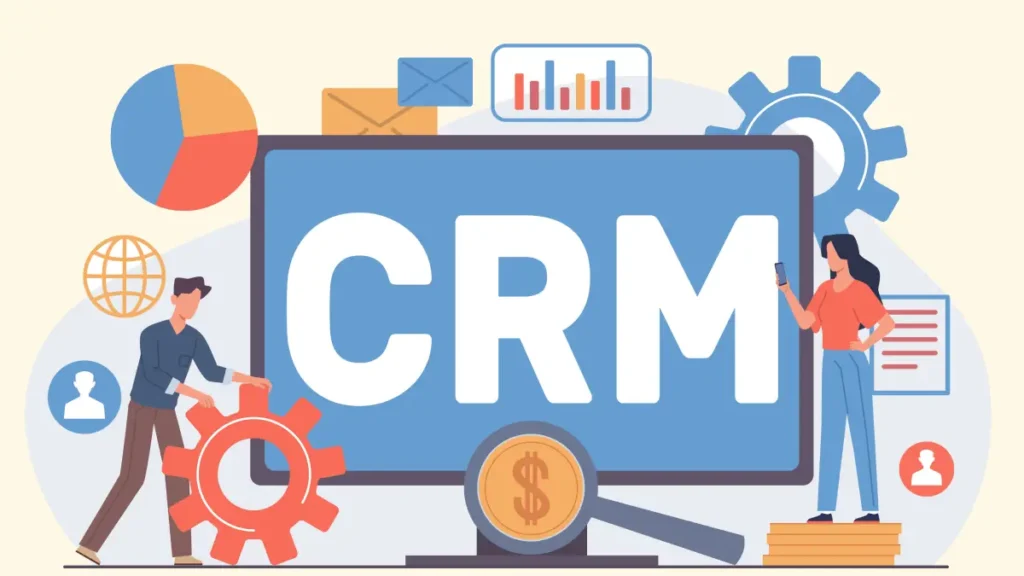
The CRM software comes into play at this point. CRM is abbreviated as Customer Relationship Management software, which assists business to organize customer information, lead management, deal tracking, and enhanced communication. To put it simply, CRM software assists sales teams to perform better, close deals more quickly, and generate greater revenue.
Let us see how CRM software enhances sales productivity and expands business growth.
What Is CRM Software?
CRM software is a computerized tool used to maintain all customer information centrally. It tracks:
- Contact details
- Email conversations
- Call records
- Meeting notes
- Sales pipeline stages
- Purchase history
The sales teams do not have to search emails or ask their colleagues about the updates, but rather find them in the CRM system. This is time-saving and minimizes errors.
Centralized Customer Data Improves Efficiency
Centralized data is one of the largest assets of CRM software. All the customer data is monitored on a single dashboard. This means:
- No duplicate data
- No missing information
- No confusion between team members
A salesperson can easily look beyond discussions, interests, and purchase history when discussing with a customer. This assists them in reacting in a confident and professional manner. Fewer hours spent searching data implies increased selling time.
Better Lead Management Increases Conversions
The sources of leads are numerous, including online platforms, social media, email, and telephone calls. In the absence of an appropriate system, one can easily lose them.
CRM software is a software that helps to capture leads automatically and store them in one location. It also:
- Assigns leads to the right sales representative
- Tracks follow-up activities
- Updates lead status
- Sends reminders for calls and emails
The conversion rates are better when no lead is forgotten. And conversion rates directly increase revenue. And higher conversion rates directly increase revenue.
Automation Saves Time and Boosts Productivity
Sales teams frequently waste time on routine activities such as follow-up email messages, spreadsheet work, or reminder notes. A large number of these are automated by CRM software.
Automated Follow-Ups
CRM has the ability to make automatic reminders of follow-up calls or emails. Other systems also transfer pre-written email templates. This guarantees uniformity and wastage of time.
Task Management
CRM automatically generates work whenever a lead is added to the system. The sales representatives are aware of what to do daily.
Email Templates
The sales teams can also use ready-made templates instead of writing the same email repeatedly. This accelerates the communication. Once the daily tasks are automated, the sales teams can concentrate on relationship building and making deals.
Clear Sales Pipeline Improves Planning
The sales pipeline indicates the process of a customer through the initial contact up to the close of a deal. CRM software presents visually every stage, including:
- New lead
- Qualified lead
- Proposal sent
- Negotiation
- Closed
It is easy to see the number of deals in each stage for managers. In case deals get stuck at one stage, they will be able to act on them instantly.
Visibility allows the teams to focus on high-value opportunities and skills to make deals. Faster deal closures translate to higher revenue.
Data-Driven Decisions Increase Revenue
Effective sales forces employ data in making intelligent choices. CRM software offers real-time reporting and analytics. Businesses can track:
- Sales performance
- Revenue growth
- Conversion rates
- Response times
- Sales targets
As an example, when the data indicates that customers tend to react to follow-ups better within 24 hours, then teams can change their approach. Proper sales forecasting is also achievable.
Through pipeline data, managers are able to project future revenue and make better plans. Revenue growth is steadier when real numbers are used to make the decisions rather than by guesswork.
Improved Team Collaboration
The CRM software enhances collaboration as it provides access to information. Updates, notes, and deal progress are visible to everyone. This prevents:
- Duplicate communication
- Misunderstandings
- Missed follow-ups
Sales teams and marketing teams are able to collaborate better. It is possible to trace the sales leads, which translate into customers. The quality of the campaigns can be assessed through sales. Improved working will result in improved performance.
Personalized Communication Builds Strong Relationships
Customers would like to have one-on-one communication. They do not desire generic messages. CRM software contains the history and preferences of customers. This assists the sales teams in sending the relevant offers and suggestions.
As an illustration, when a customer has already bought a product, the salesperson would be able to suggest a correlated product. This enhances the possibility of upselling and cross-selling.
Individualization enhances satisfaction among customers. Being a happy customer will make your customers come more often and refer their friends to your business.
Faster Sales Cycle Means Higher Revenue
Time is a significant factor in sales. The quicker you react and make deals, the bigger your income. CRM software accelerates the sales process because:
- Providing instant access to customer data
- Sending automated reminders
- Tracking deal progress
- Reducing delays
Quick responses build trust. The timely communication received by customers leads to a higher chance of having a more rapid purchase decision. The reduction of the sales cycles implies an increase in deals made within a specific timeframe.
Scalability for Growing Businesses
With the expansion of businesses, it is hard to handle customer data manually. CRM software can be used to manage high customer volumes and leads without panic.
It streamlines the sales operations and simplifies the process of training new members. Operations are well-organized even in the case of the team expansion. This scalability helps in a long-term increase in revenues.
Conclusion
CRM software is not simply a contact management software. It is an effective mechanism that enhances the productivity of sales and the motivation of development of revenues. CRM software can enable a sales force to perform optimally by consolidating customer information, automating operations, improving lead management, delivering real-time information, and improving teamwork.
With higher productivity, revenue automatically increases. When your company is determined to make more deals, minimize mistakes, and expand more rapidly, investing in the appropriate CRM software is not the only smart decision to make. It is a mandatory move towards net sustainable success.