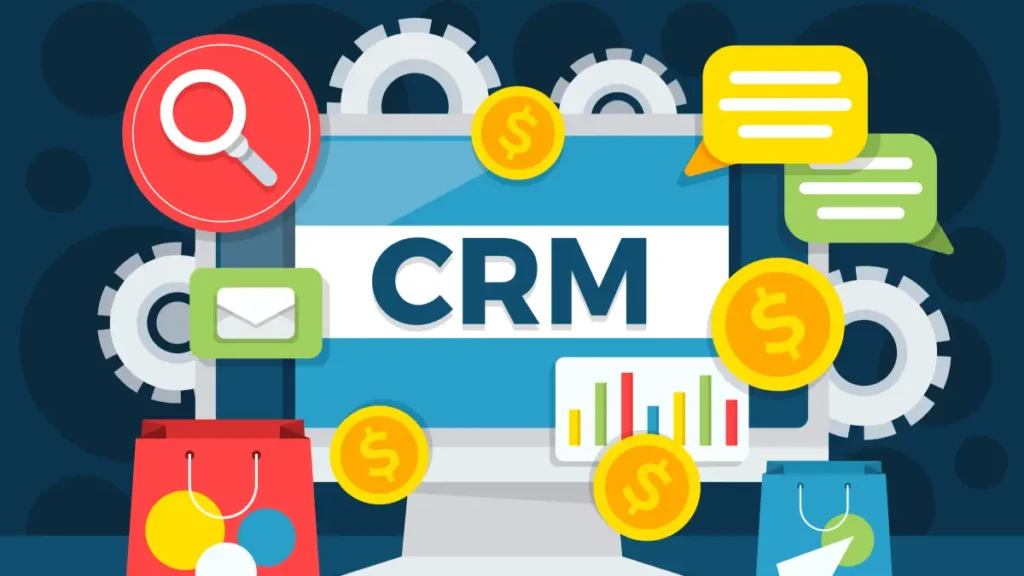
In the current competitive world, sales can no longer be a simple process of calling and closing and selling deals. It is concerned with relationship building, data tracking, timely following up and customer needs. Sales teams that perform well avoid the use of memory, spreadsheet, and sticky notes. They are based on a strong system known as CRM.
A successful sales team is made by Customer Relationship Management, also known as CRM. It makes everything well-organized, increases productivity and makes business develop rapidly. Let us know the reasons why CRM is so significant and why it enables sales teams to work optimally.
What Is CRM in Sales?
CRM is an abbreviation of Customer Relationship Management. It is a software that assists companies to maintain customer data, follow-ups and trace sales process up to the end product sales.
CRM stores all customer information on a central location as opposed to having the information stored in various files or notebooks. Accessing information and responding fast is made easy by the sales teams. It stores:
- Contact details
- Email conversations
- Call records
- Meeting notes
- Deal status
- Purchase history
Centralized Customer Information
Centralized data is one of the greatest benefits of CRM to sales teams. The information on all customers is located within the same system. This implies that there is no confusion and no detail omitted. Upon talking to a customer, a sales representative will be able to view the history of the past interactions.
They are aware of what the customer requested previously and what item they expressed interest in and the point at which they are at in the deal. It aids the sales teams to offer personalized communication. When companies recall their preferences and previous discussions, customers are assured of their importance to the business.
Clear Sales Pipeline Visibility
A sales pipeline is what the lead follows and it is closed with the final deal. CRM software shows this pipeline in a clear manner.
Typical stages may include:
- New lead
- Contacted
- Proposal sent
- Negotiation
- Closed
Under CRM, sales managers will easily be able to see the number of deals in each stage. They are able to know where the deals are stalling and act fast. Such visibility helps to better the planning and nobody leaves an opportunity behind.
Better Lead Management
The sources of leads are numerous as referred to as websites, social media, email campaigns, and referrals. It is possible to lose track of them without an appropriate system. CRM automatically collects leads and allocates them to the sales representatives.
Follow- ups and reminders are also monitored. This also avoids leaking of lead and this implies that there is no prospective customer that is overlooked. A process of lead management is structured and this enhances the conversion chances.
Increased Sales Productivity
The sales teams that perform well are rather sales oriented than administrative oriented. This is possible with the help of automation in CRM.
Automation of Repetitive Tasks
CRM can automate:
- Follow-up reminders
- Email templates
- Task assignments
- Status updates
This saves time and reduces human error.
Time Management
The salespeople are able to focus on leads of high value. They will be able to monitor the daily goals and concentrate on those deals which are near closing. Routine tasks are automated giving more time to building relationships and closing deals to sales teams.
Data-Driven Decision Making
Effective sales departments do not rely on luck. They derive data in order to make wise choices. CRM has real-time reports and analytics.
Managers can track:
- Conversion rates
- Revenue growth
- Sales targets
- Team performance
- Customer acquisition cost
Businesses are able to predict possible revenue in future and make better strategies using this data. To illustrate, when reports indicate that majority of deals close following three follow-ups, the teams can change their approach.
Improved Team Collaboration
Sales is not commonly an individual job. It can be the marketing teams, customer support, and managers. CRM enhances coordination through the provision of access to common customer information. Members of the team are able to leave notes, update stages of the deal and track progress together.
This helps to avoid confusion and duplication of work. All people remain in the same line. The managers are also able to check what the team is doing, and give advice where necessary. This enhances accountability and transparency.
Stronger Customer Relationships
At its core, CRM is about building strong customer relationships.
Personalized Communication
CRM contains preference and history of the customer. This aids the sales teams by sending relevant offers and messages. To illustrate, the sales team can recommend related products, in case a customer has purchased one of their products before. This enhances the opportunities of upselling and cross-selling.
Faster Response Time
All data is readily available, thus the sales representatives can act fast. The fast responses enhance customer satisfaction and trust. Clients will be more eager to remain loyal to the brand in case they are made to feel comprehended and suitable.
Scalability for Growing Businesses
The more a business expands, the more leads and customers. It is hard to cope with everything manually.
CRM supports scalability by:
- Organizing large volumes of data
- Standardizing sales processes
- Helping train new team members easily
- Managing multiple communication channels
CRM also makes operations run smoothly regardless of the number of sales people in the company, be it five people or fifty.
Problems Without CRM
Sales teams that do not use CRM often face:
- Lost leads
- Missed follow-ups
- Inaccurate forecasting
- Poor team coordination
- Unclear sales performance
These problems decelerate the growth and decrease the revenues. Conversely, sales teams that perform well embrace CRM as a formal system in order to fulfill all opportunities efficiently.
The Future of CRM in Sales
Modern CRM systems are getting smarter using artificial intelligence and automation. They can:
- Predict which leads are more likely to convert
- Suggest the best time to follow up
- Analyze customer behavior
- Provide advanced sales insights
This makes CRM even more powerful for high-performing sales teams.
Conclusion
CRM is not just software. It is the pillar of successful sales groups. It introduces order, openness and effectiveness into the overall selling process. CRM is also important to the success of sales through the management of leads and tracking deals, enhancement of collaboration, and forecasting of revenue.
To achieve a better conversion, better efficiency, and closer customer relations in order to close more deals, a sales team would be wise to invest in a dependable CRM solution. In the current competitive business environment, CRM is not working with high performing sales teams. They grow with it.